
Last updated September 23, 2026
Whole-system duct and dryer vent check with before-and-after photos - you see exactly what came out of your vents
That "$99 whole-house special" is a bait ad - the real number appears once they are in your hallway, or the "clean" is a shop-vac at the register. We photograph the inside of your ducts before and after instead.
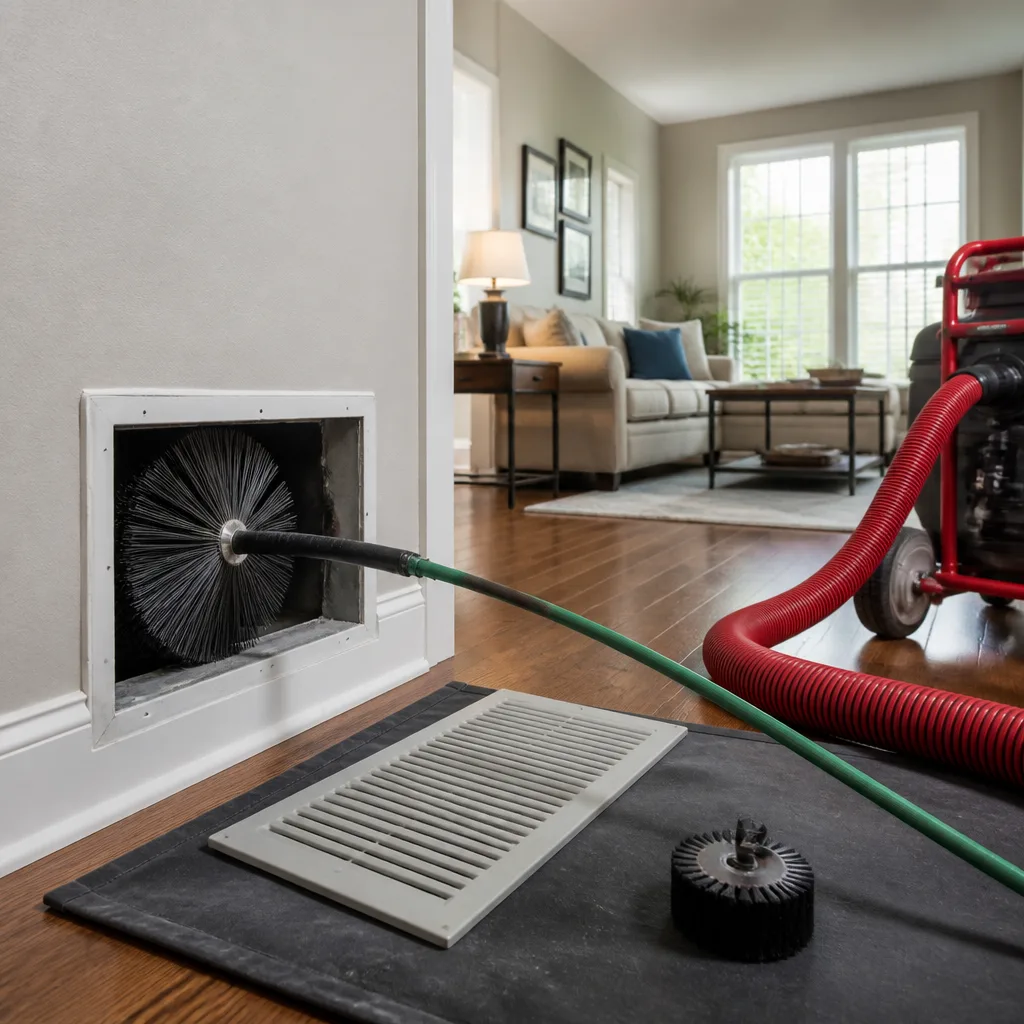
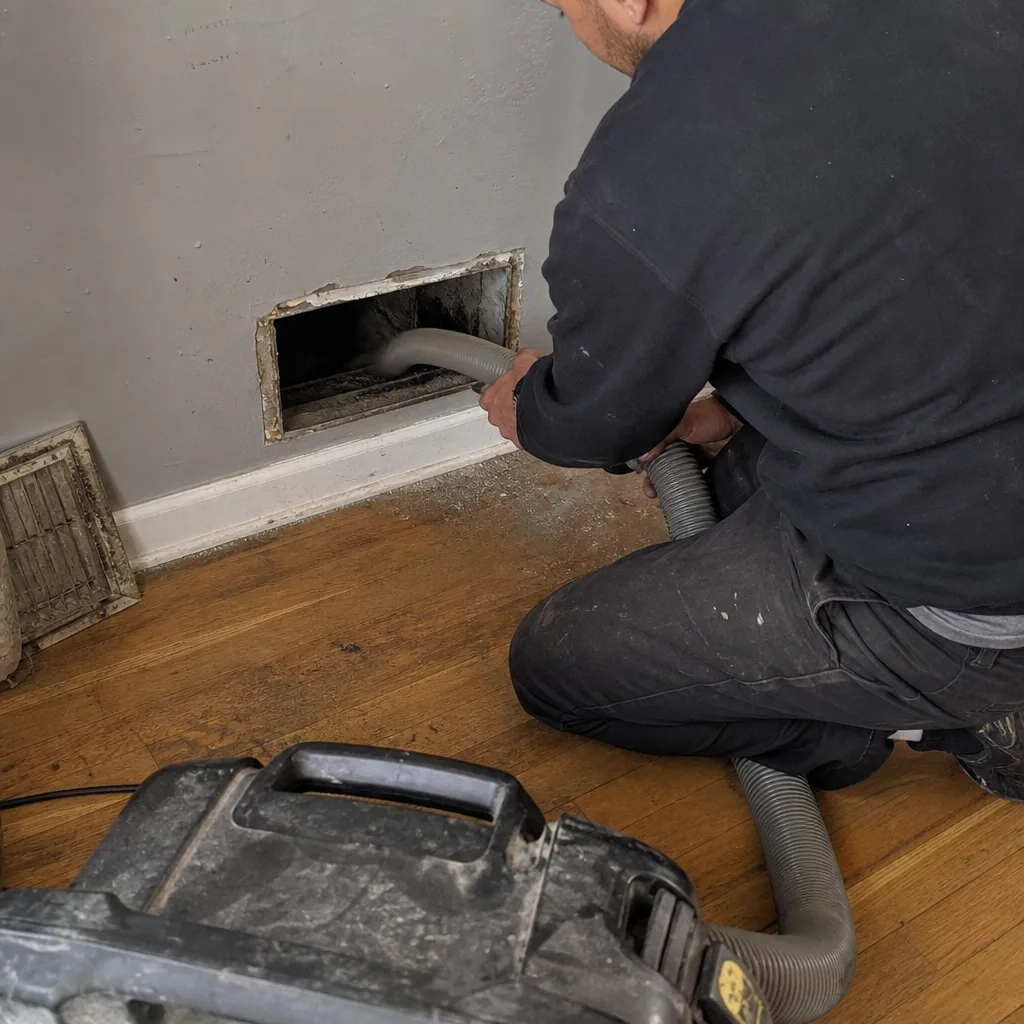 Before
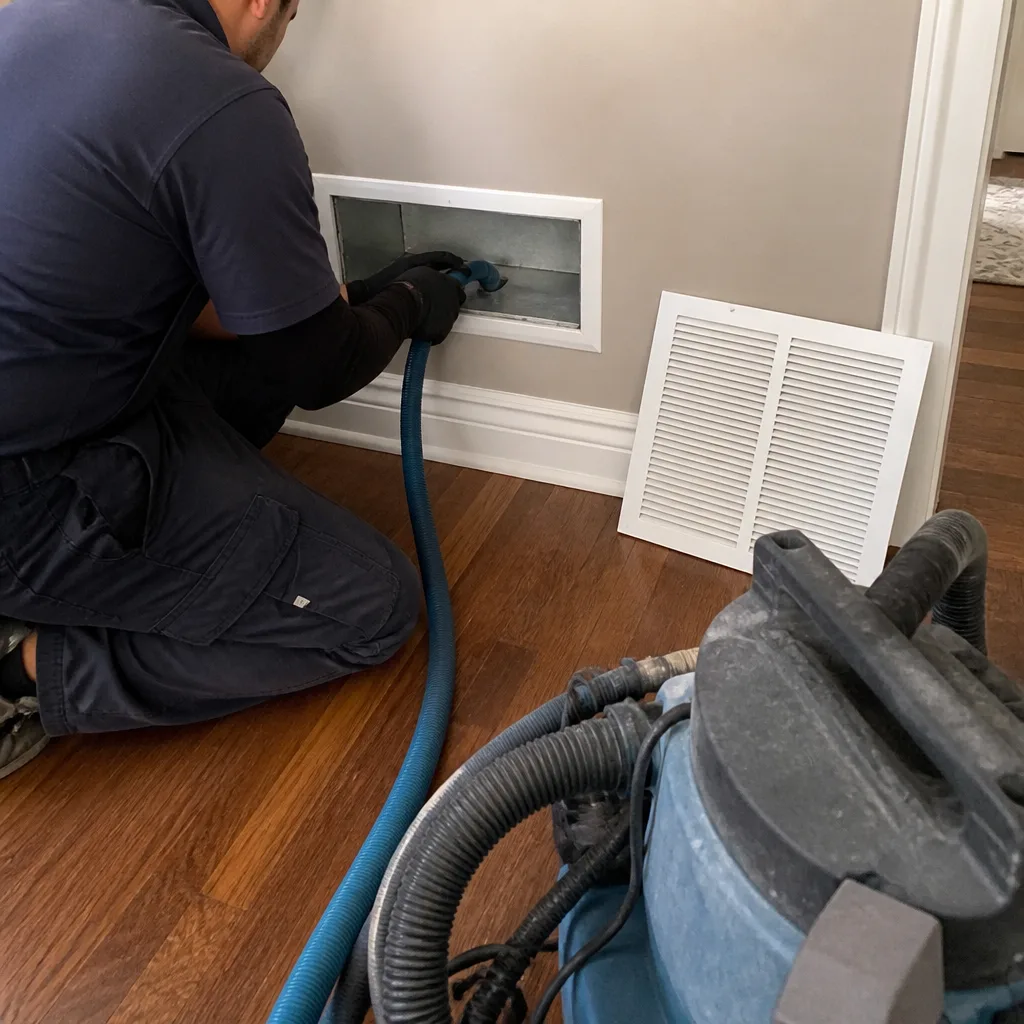 After
After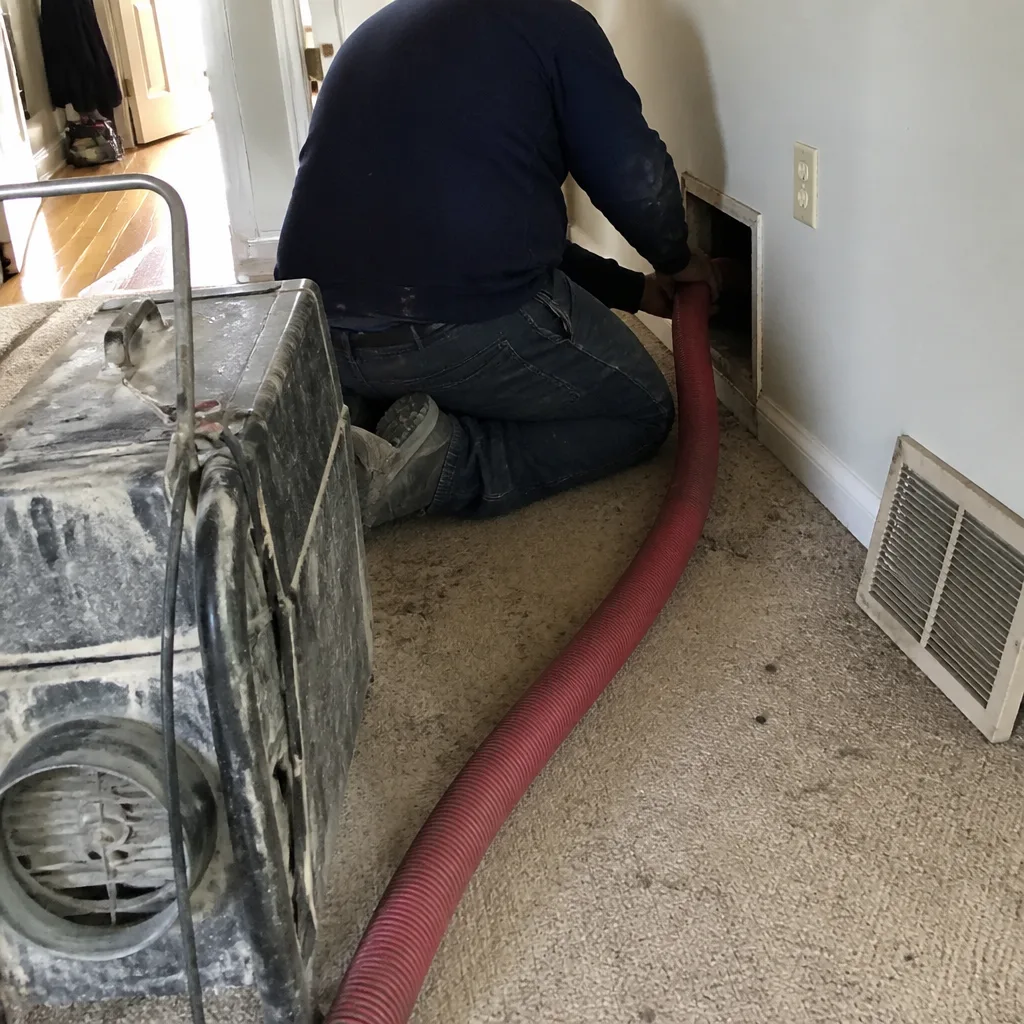 Before
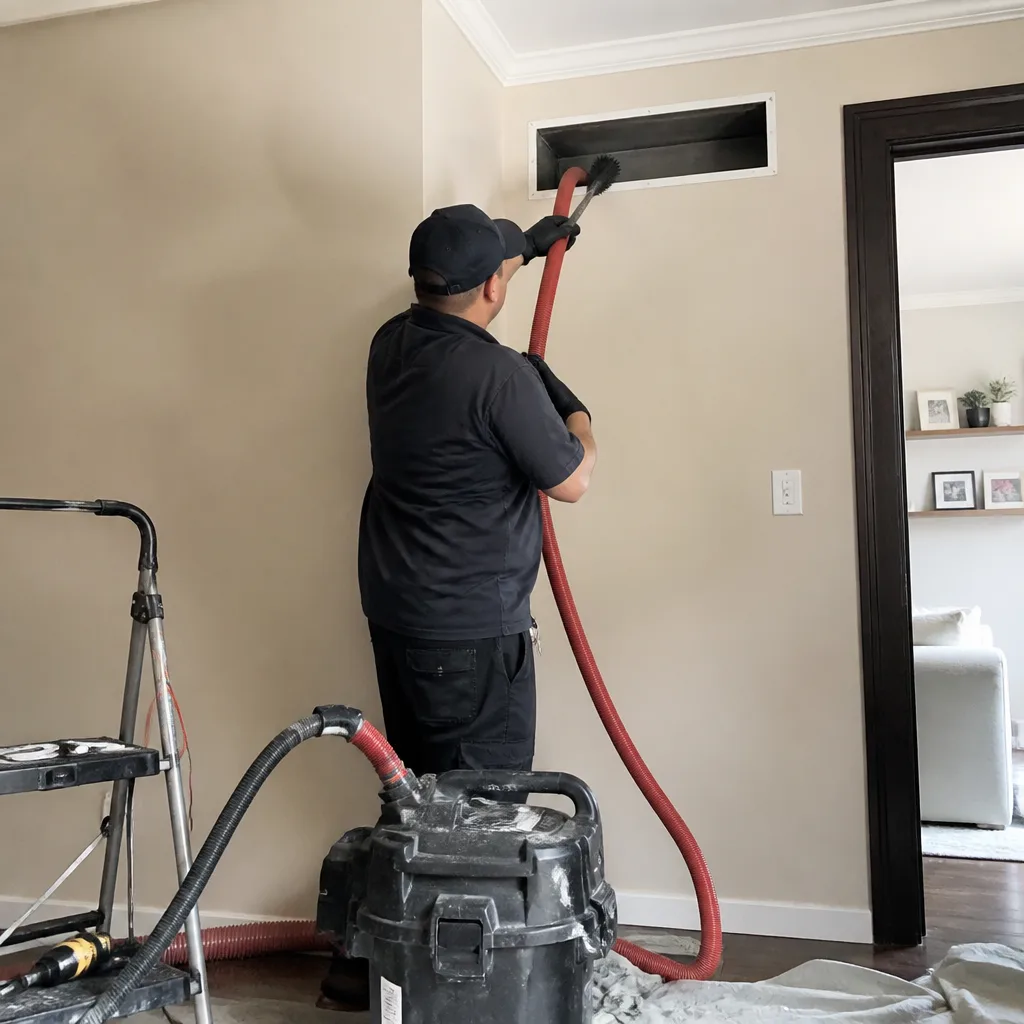 After
After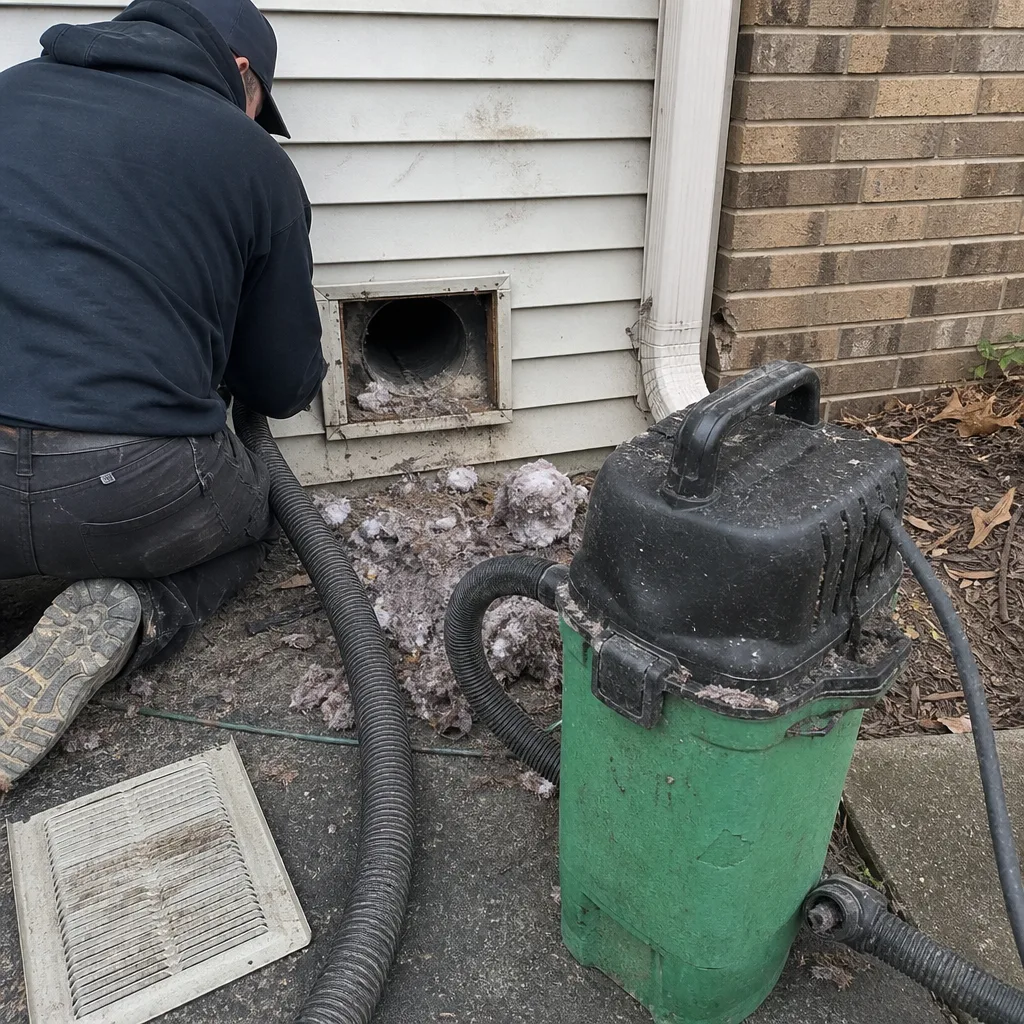 Before
 After
AfterDIY vs Professional Air Duct Cleaning: The Schaumburg Homeowner’s Decision Guide
The most popular DIY air duct cleaning kit on Amazon generates approximately 100 CFM of suction. A typical Schaumburg colonial with 20 supply runs requires 2,000 to 4,500 CFM at the main trunk to move loosened debris to a filter rather than redistributing it to bedrooms and living spaces. That gap, 20 to 45 times the suction power, is why agitating dust without capturing it often leaves air quality worse than when you started. In this guide, we’ll show you the actual equipment specifications, what DIY can safely accomplish, what it cannot, and how to decide if Air Duct Cleaning services fit your home.
Quick Answer
DIY air duct cleaning can handle register grille wiping, visible debris within the first 12 inches of accessible duct, and single straight dryer vent runs under 25 feet. Professional cleaning is warranted for full-system debris removal, mold concern, or any home where occupants have asthma, allergies, or compromised immunity. The dividing line is suction physics: consumer equipment cannot generate the negative pressure required to capture agitated particulate before it re-enters your living space.
Table of Contents
- What CFM Means and Why It Decides Everything
- Consumer Equipment: The Real Specs
- What DIY Can Actually Accomplish
- What DIY Cannot Do: The Physics of Re-suspension
- Schaumburg Homes: Local Factors That Matter
- The Decision Flowchart: Three Inputs
- What Professional Cleaning Actually Looks Like
- Cost Comparison: Real Numbers for Schaumburg
BeforeAfterWhat CFM Means and Why It Decides Everything
CFM stands for cubic feet per minute, the volume of air a vacuum or collection unit moves in 60 seconds. In duct cleaning, CFM determines whether loosened debris travels to the filter or settles somewhere else in your system.
Think of your duct network as a tree. The main trunk line runs from the furnace or air handler, then branches into smaller lines that terminate at wall and floor registers. When you brush or blow debris loose in one branch, that particulate becomes airborne. Without sufficient suction at a strategic access point, gravity and airflow patterns carry it to other branches, the return plenum (the large chamber that draws air back to the furnace), or straight through the fan and into rooms.
Here’s how the numbers break down for common equipment:
- Consumer stick vacuum: 40-80 CFM. Designed for hard surfaces and carpet, not enclosed metal ductwork with friction losses.
- Shop-vac with 2.5-inch hose: 100-180 CFM. Useful for garage spills, inadequate for 6-inch diameter duct runs with multiple bends.
- Portable HEPA vacuum (Nikro, Abatement Technologies portable units): 300-600 CFM. Professional portable equipment, still requiring strategic access point placement.
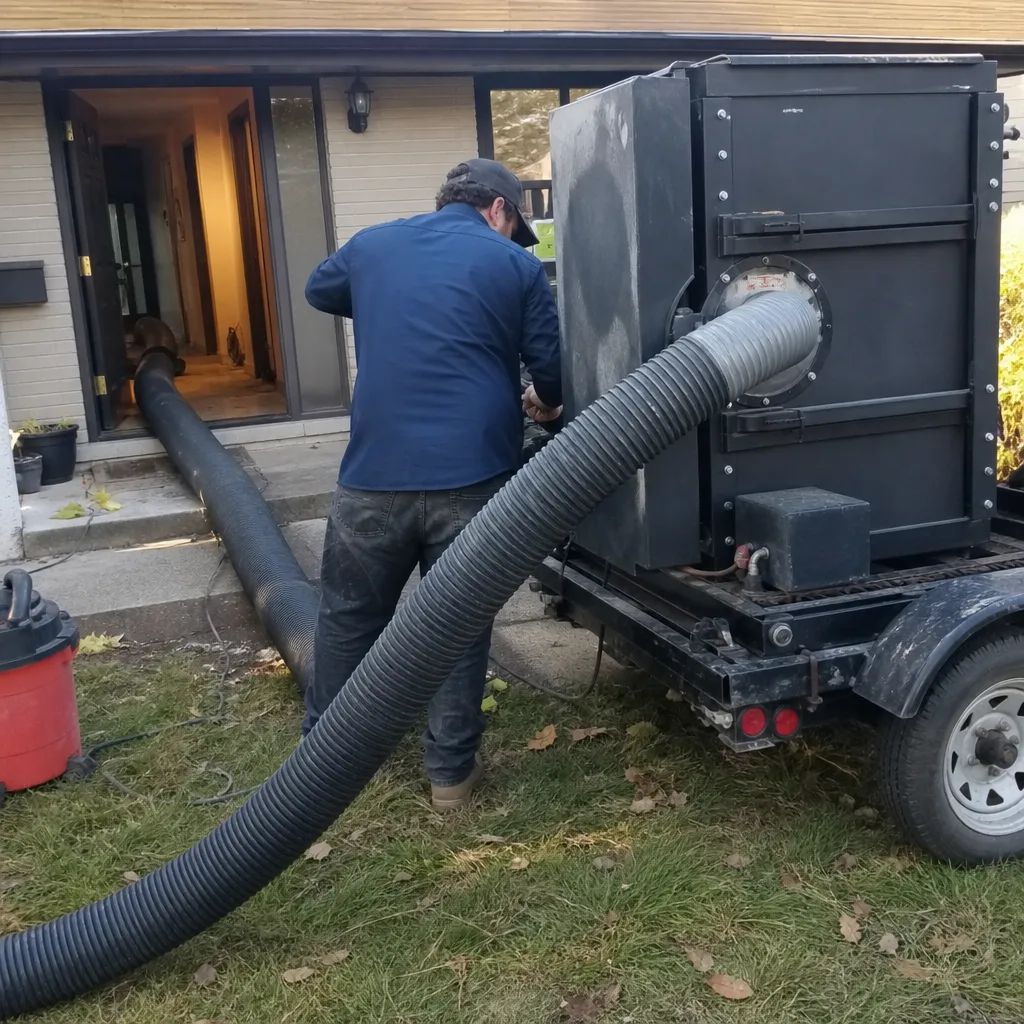
- Truck-mounted negative pressure system (Nikro, Abatement Technologies truck units): 2,000-5,000 CFM. Connected to the main trunk through an 8-inch access port, creating suction throughout the entire system.
The math is unforgiving. A 6-inch round duct run has roughly 0.2 square feet of cross-sectional area. To maintain air velocity above 2,000 feet per minute, the threshold where particulate remains suspended rather than settling, you need 400 CFM in that single run alone. A whole-home system with 15-25 runs demands collection capacity measured in thousands, not hundreds.
This is why the Amazon kit’s 100 CFM rating, often marketed with phrases like “powerful suction,” cannot perform the job its packaging implies. It can agitate debris. It cannot reliably transport that debris to a filter.
Consumer Equipment: The Real Specs
We’ve handled calls from Schaumburg homeowners in neighborhoods like Weathersfield and Sheffield Park who purchased consumer-grade duct cleaning attachments and noticed more dust settling on furniture afterward. The equipment wasn’t defective. It was mismatched to the task.
Let’s examine what’s actually available to consumers and what the specifications reveal:
Rotary Brush Kits with Vacuum Attachment
These kits, typically $30-$80, include a flexible rod with a nylon brush head and a hose adapter meant to connect to a household vacuum. The brush agitates duct walls. The vacuum connection promises capture. The problem: household vacuums, even “high suction” models from recognizable brands, operate at 3-6 inches of water lift pressure with 50-100 CFM at the hose end. Duct friction, bends, and distance from the motor reduce this further. The brush loosens debris. The vacuum captures a fraction. The remainder becomes airborne within the duct system.
Shop-Vac with Duct Adapter
A 6.5 HP shop-vac generates roughly 180 CFM with a 2.5-inch hose. This is the strongest consumer-accessible option short of renting professional equipment. For context, the Nikro portable HEPA systems our technicians use on certain Schaumburg jobs, townhomes with limited parking for instance, start at 500 CFM with a 3-inch hose and HEPA filtration rated at 99.97% at 0.3 microns. The shop-vac lacks both the airflow and the filtration standard.
Compressed Air “Duct Cleaning” Systems
Some consumer products use compressed air to blow debris through ducts. Without simultaneous negative pressure extraction, this is the worst approach for residential systems. The debris must go somewhere. In practice, it exits through registers into living spaces, or compresses into elbows and connections where airflow is weakest. We’ve photographed blockages in Schaumburg homes caused by years of accumulated debris that was blown, not removed.
What You Can Rent
Some equipment rental yards carry portable duct cleaning machines. These typically produce 1,000-1,500 CFM, closer to professional grade but without the technician training to place access points correctly, seal registers for negative pressure containment, or interpret what the camera shows. The machine is half the equation. System knowledge is the other half.
What DIY Can Actually Accomplish
DIY duct maintenance has a legitimate role. The key is matching the task to equipment that can actually perform it. Here are three scenarios where consumer tools are sufficient:
- Register and grille cleaning. Remove floor and wall registers. Wash with warm water and mild detergent. Vacuum the visible duct opening with a hose attachment. This removes surface dust and the debris that accumulates at register terminations, where airflow drops and particulate settles. A standard household vacuum handles this because the distance is inches, not feet, and the opening is accessible.
- Visible debris within the first 12 inches. If you can see and reach debris with a flashlight and a rigid vacuum hose, removal is straightforward. Beyond 12 inches, duct bends and friction make consumer vacuum capture unreliable. Mark this boundary clearly in your assessment.
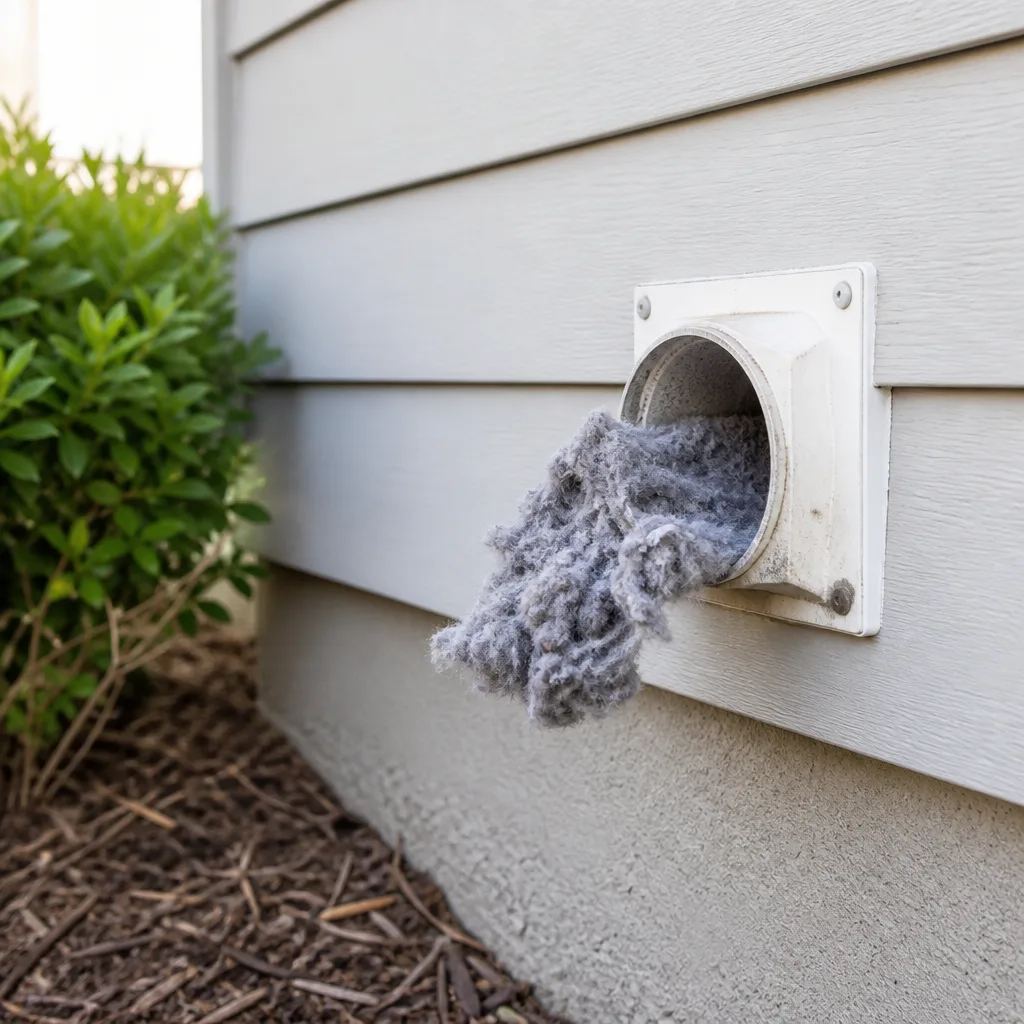
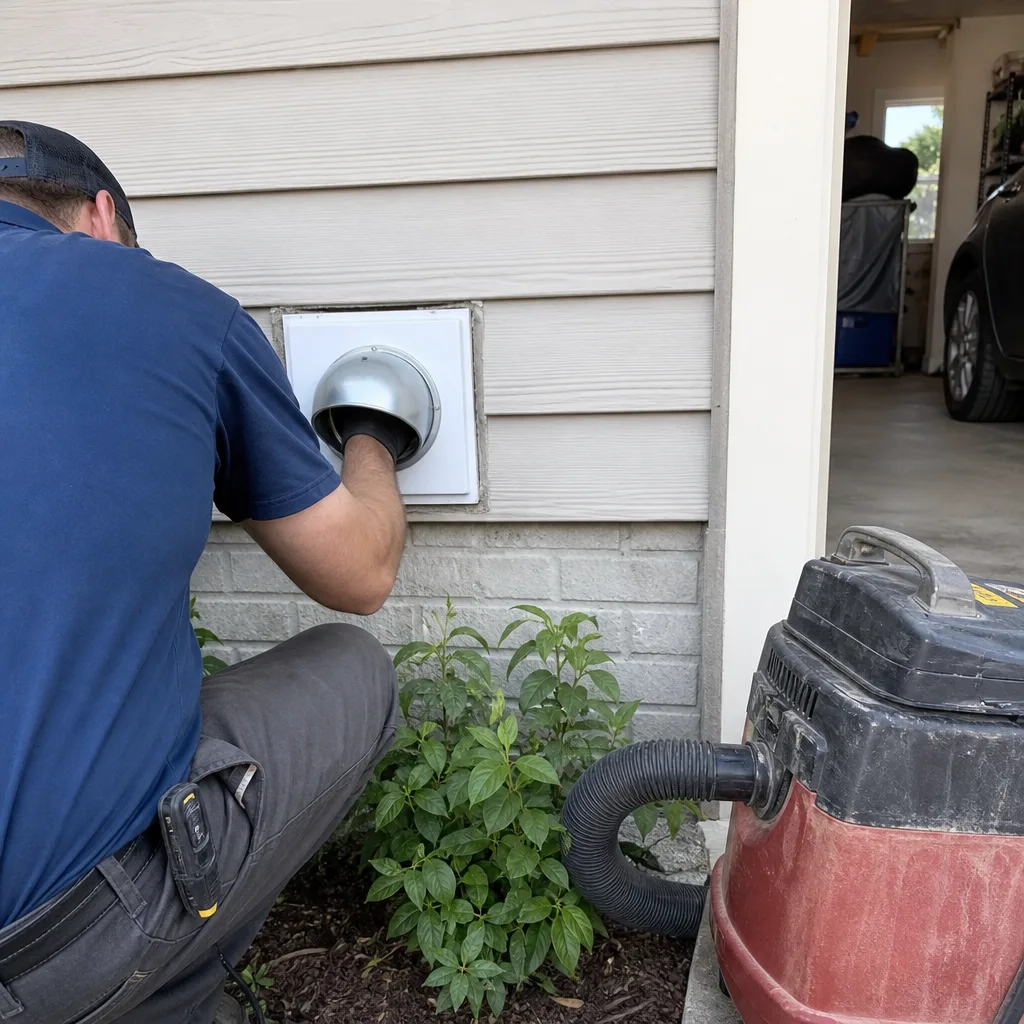
- Dryer vent runs: single, straight, under 25 feet. This is the one scenario where DIY is often the correct call. A rotary dryer vent brush kit, $20-$40, with a cordless drill driver, can clear lint accumulation from a straight run terminating at an exterior wall. The critical requirements: the run must have no bends or elbows, must be rigid metal (not foil or plastic), and must terminate where you can place a HEPA shop-vac at the exterior cap to capture dislodged lint. If any of these conditions fail, call a professional. Dryer vent fires are a genuine hazard, and improper cleaning can compact lint into elbows where it obstructs airflow and creates ignition risk.
For dryer vent cleaning in Schaumburg with complex routing through attics or crawl spaces, Dryer Vent Cleaning in Schaumburg covers our full process.
What DIY Cannot Do: The Physics of Re-suspension
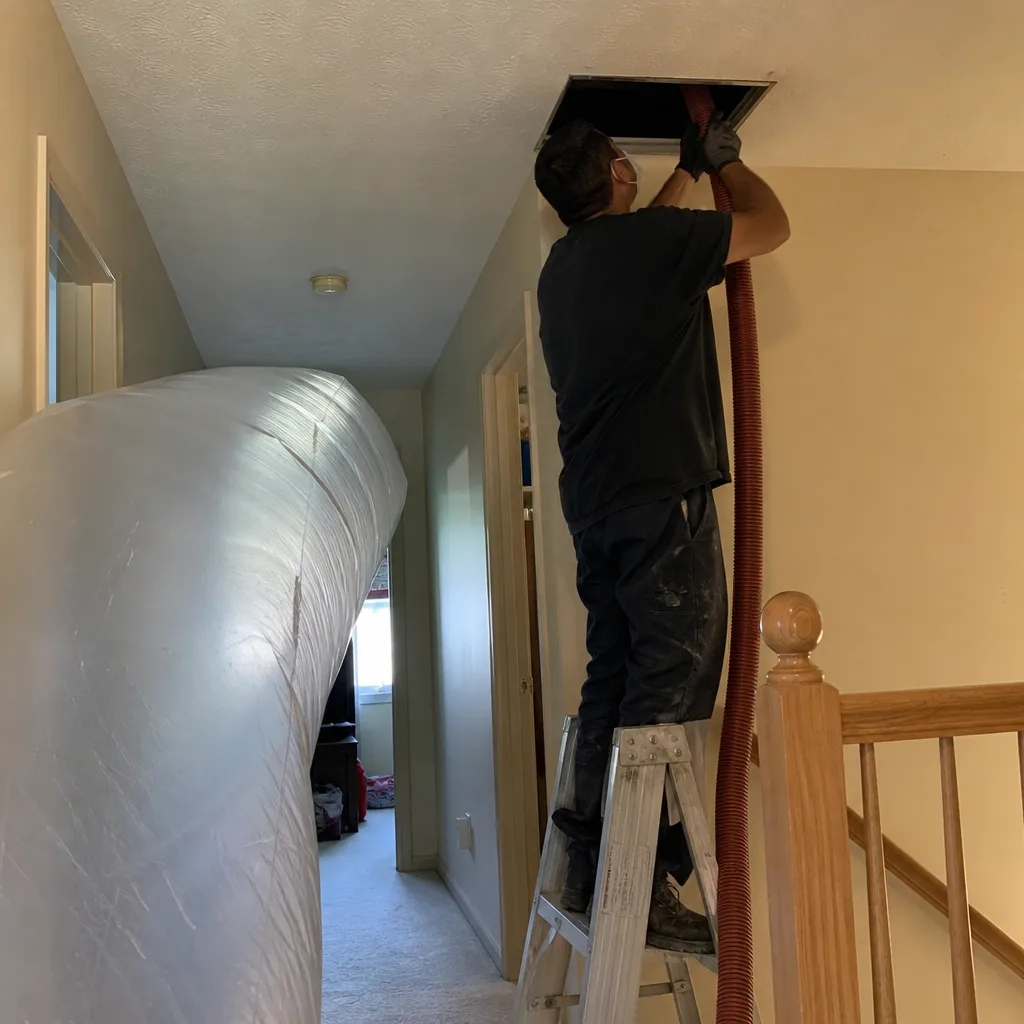
The danger of inadequate suction isn’t that cleaning fails. It’s that cleaning makes conditions temporarily worse.
When debris is agitated, whether by brush, compressed air, or even aggressive vacuuming with underpowered equipment, particulate enters the airstream. Without sufficient negative pressure to maintain suspension and transport to a filter, three outcomes occur:
- Re-suspension into living space. Debris exits through registers into rooms. We’ve measured PM2.5 levels in Schaumburg homes spike for 48-72 hours after DIY attempts, particularly in homes with forced-air systems that cycled during or after the cleaning attempt.
- Migration to other duct branches. Debris travels the path of least resistance, often accumulating in low-velocity sections: long horizontal runs, duct boots (the transition piece between duct and register), or the return plenum. These become future mold substrates or airflow restrictions.
- Contamination of the HVAC components. Debris pulled through the system coats the evaporator coil, blower motor, and heat exchanger. The evaporator coil is particularly vulnerable: its wet surface during cooling season traps particulate, reducing efficiency and potentially supporting microbial growth. HVAC Cleaning in Schaumburg addresses full-system component cleaning when this has occurred.
The temporary air quality degradation can exceed pre-cleaning baseline for days or weeks. This isn’t hypothetical. In our work across Schaumburg, from the older ranch homes near Meacham Road to the newer construction in Windy Hill, we’ve documented this pattern with before-and-after photo records showing debris redistribution rather than removal. For Seasonal Air Duct Cleaning Care for Schaumburg: Year-Round Homeowner’s Guide, see our seasonal maintenance recommendations.
Schaumburg Homes: Local Factors That Matter
Schaumburg’s housing stock and climate create specific conditions that influence whether DIY maintenance is sufficient or professional scope is warranted.
Age distribution and duct materials. Schaumburg’s building boom spans three distinct eras. Homes built 1960-1985, concentrated in neighborhoods like Weathersfield, often have galvanized steel ductwork with unsealed joints and minimal internal insulation. These systems leak conditioned air and draw in attic or crawl space particulate. DIY cleaning of leaky ducts agitates debris that re-enters through gaps. Professional scope includes duct sealing, not just cleaning.
Homes built 1985-2005, including much of Sheffield Park and Pleasant Square, typically feature flex duct (insulated flexible ductwork) with fiberglass lining. The lining traps debris and can degrade if agitated improperly. Consumer brush kits snag on flex duct ridges and can tear the inner liner.
Newer construction, 2005-present, often uses sheet metal with external insulation. These systems are more durable but frequently have complex zoning and multiple return paths that require professional assessment to clean without cross-contaminating zones.
Climate and seasonal loading. Schaumburg’s continental climate means ducts operate as both heating and cooling distribution. Summer humidity peaks at 70%+ in July and August. When debris accumulates in cool, humid sections of ductwork, particularly the evaporator coil plenum, it creates conditions for microbial growth. DIY cleaning without antimicrobial treatment, where indicated, addresses symptom not cause.
Local air quality inputs. Proximity to I-90, I-290, and the industrial corridor near Higgins Road means outdoor particulate loading is higher than in exurban areas. Schaumburg homes with frequent HVAC operation accumulate debris faster. The EPA’s indoor air quality guidance recommends professional duct evaluation every 3-5 years for homes in high-traffic corridors.
Code and permit context. Cook County and Schaumburg building codes do not require permits for duct cleaning. However, duct modification, including access panel installation for proper cleaning scope, falls under mechanical code. Professional technicians understand where access panels can be installed without code violation, and where existing access is sufficient.
The Decision Flowchart: Three Inputs
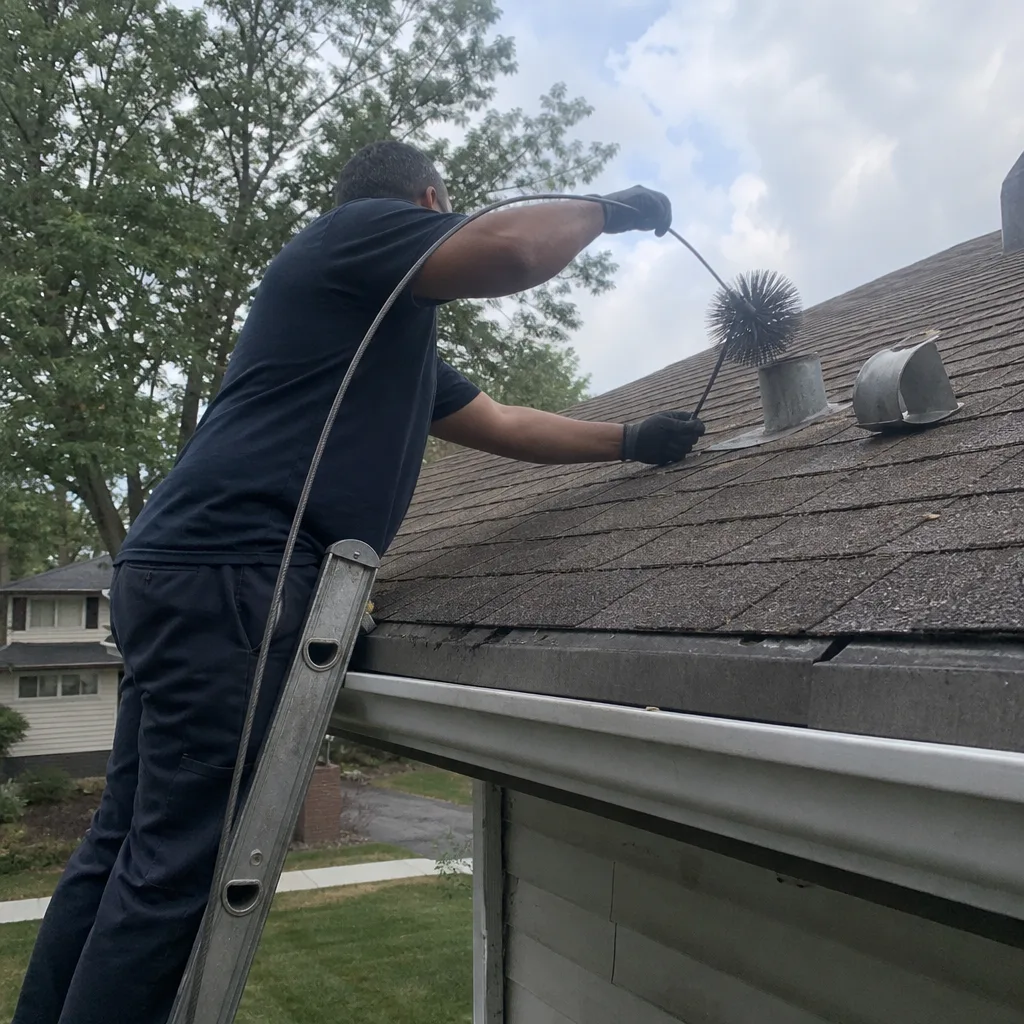
Use these three inputs to determine whether DIY maintenance is sufficient or professional scope is warranted. No upsell pressure, no urgency. Just system logic. For How to Hire a Air Duct Cleaning Contractor in Schaumburg: A Step-by-Step Guide, see our detailed hiring framework.
Input 1: System Age
- Under 5 years: DIY register cleaning and filter maintenance are typically sufficient unless construction debris was present at move-in or remodeling occurred.
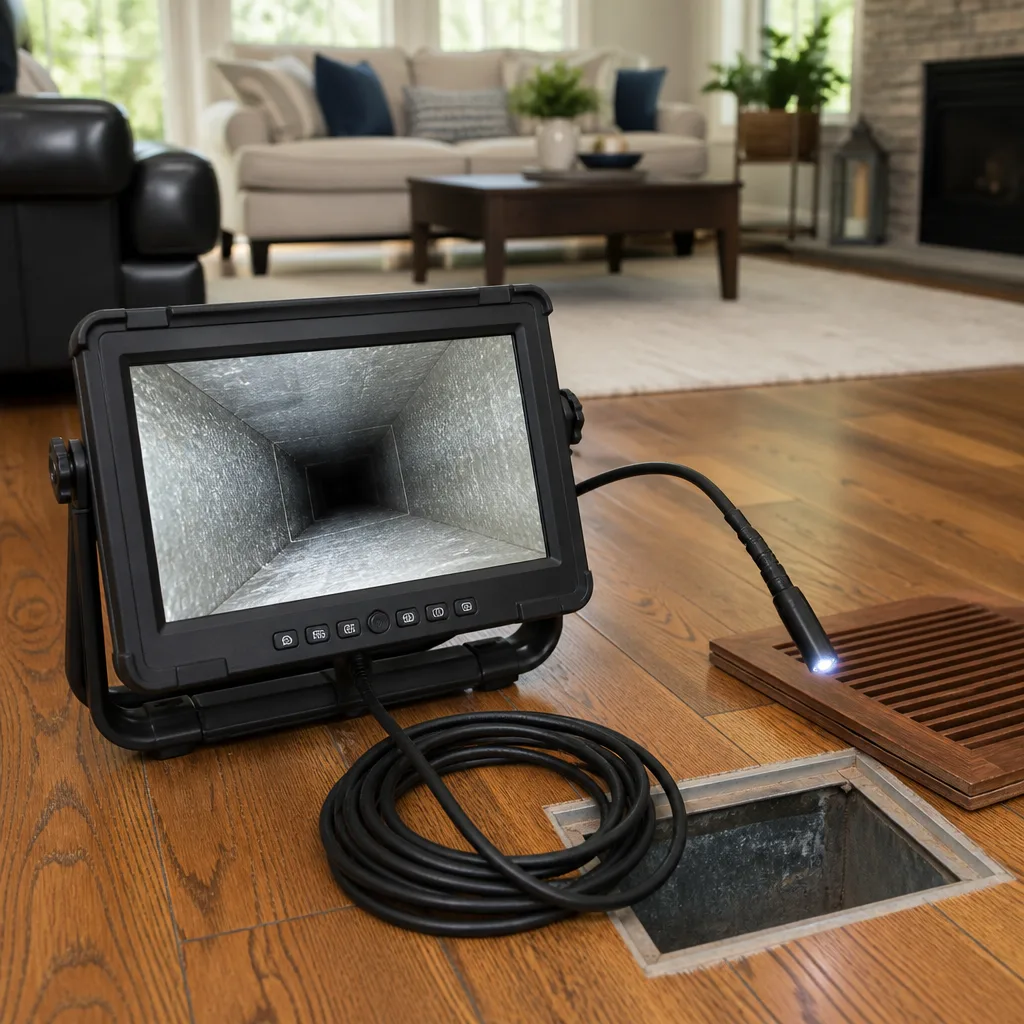
- 5-15 years: Professional inspection recommended. Debris accumulation accelerates as filters degrade and seals settle. A camera inspection reveals actual conditions without committing to full cleaning.
- Over 15 years: Professional scope warranted. Duct degradation, joint separation, and accumulated debris exceed DIY capacity. Consider duct sealing concurrently.
Input 2: Last Professional Cleaning Date
- Never / Unknown: Professional baseline cleaning establishes condition. Subsequent maintenance intervals can be longer.
- 3-5 years ago: DIY register maintenance acceptable if no occupancy changes or air quality complaints.
- Over 5 years: Professional re-evaluation. Debris loading in Schaumburg’s climate typically reaches threshold for full cleaning in this interval.
Input 3: Household Sensitivity Factors
- No sensitivities, no complaints: DIY maintenance with periodic professional inspection (every 3-5 years).
- Mild allergies, occasional symptoms: Professional cleaning with HEPA-filtered equipment. The filtration standard matters; consumer HEPA vacuums exist, but system-wide negative pressure HEPA is different.
- Asthma, COPD, immunocompromised occupant, infant, or elderly resident: Professional scope mandatory. The risk of re-suspension from inadequate DIY suction is not worth the savings. Demand documented photo record and written scope.
Output rule: If any input points to “professional,” the answer is professional. These factors compound, they don’t average.
What Professional Cleaning Actually Looks Like
Understanding professional process helps you evaluate any contractor, including CleanRun Air Duct Cleaning Schaumburg home. Here’s what proper scope includes, with equipment specifications you can verify independently.
Step 1: System Assessment and Access Planning
The technician inspects the furnace, air handler, and accessible ductwork. Access panels are installed at the main trunk and return plenum if not present. This is mechanical work requiring knowledge of system layout, not brute force. Improper access creation damages ductwork and violates code.
Step 2: Negative Pressure Setup
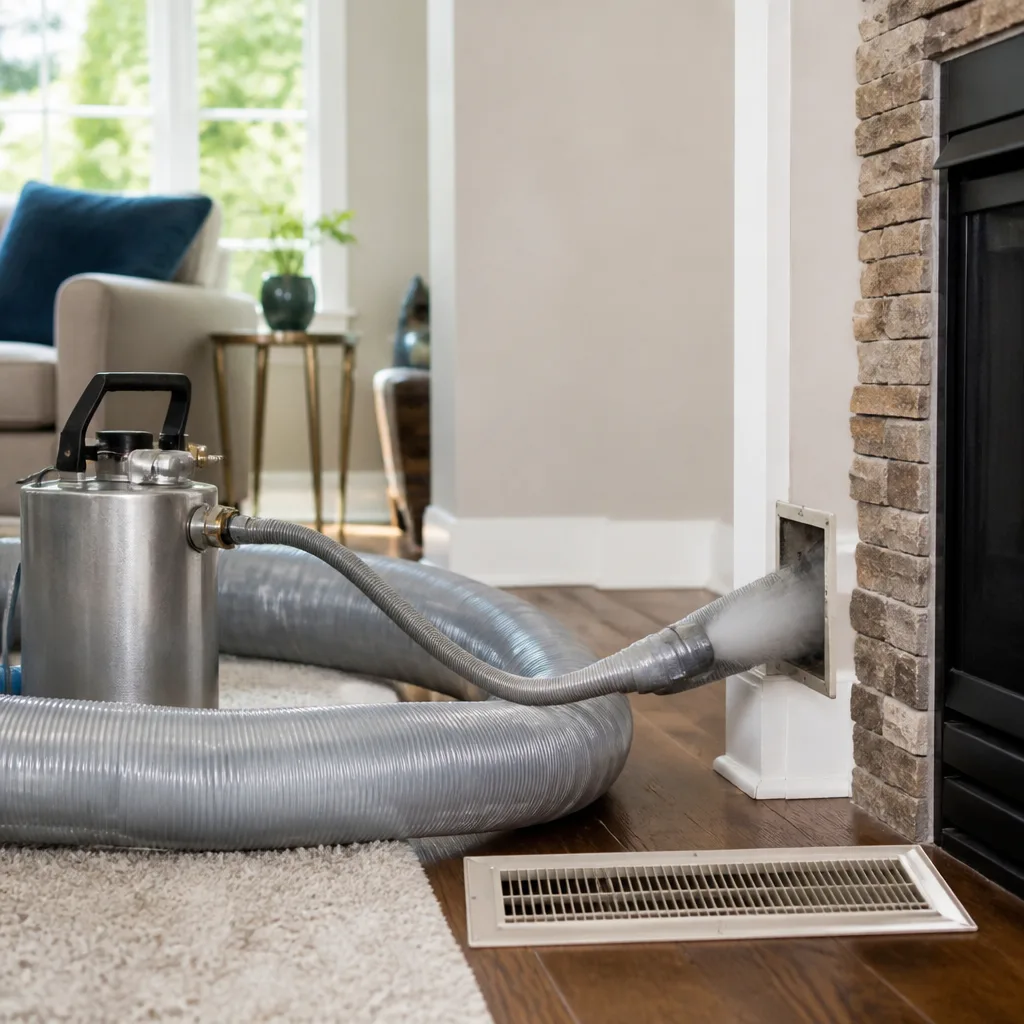
A truck-mounted or large portable collection unit, 2,000+ CFM, connects to the main trunk. All registers are sealed. This creates negative pressure throughout the system: air flows toward the collection unit, not into rooms. The Honeywell and Aprilaire air quality monitors we deploy during Schaumburg jobs verify containment; particulate levels in living spaces remain stable during cleaning.
Step 3: Agitation and Extraction
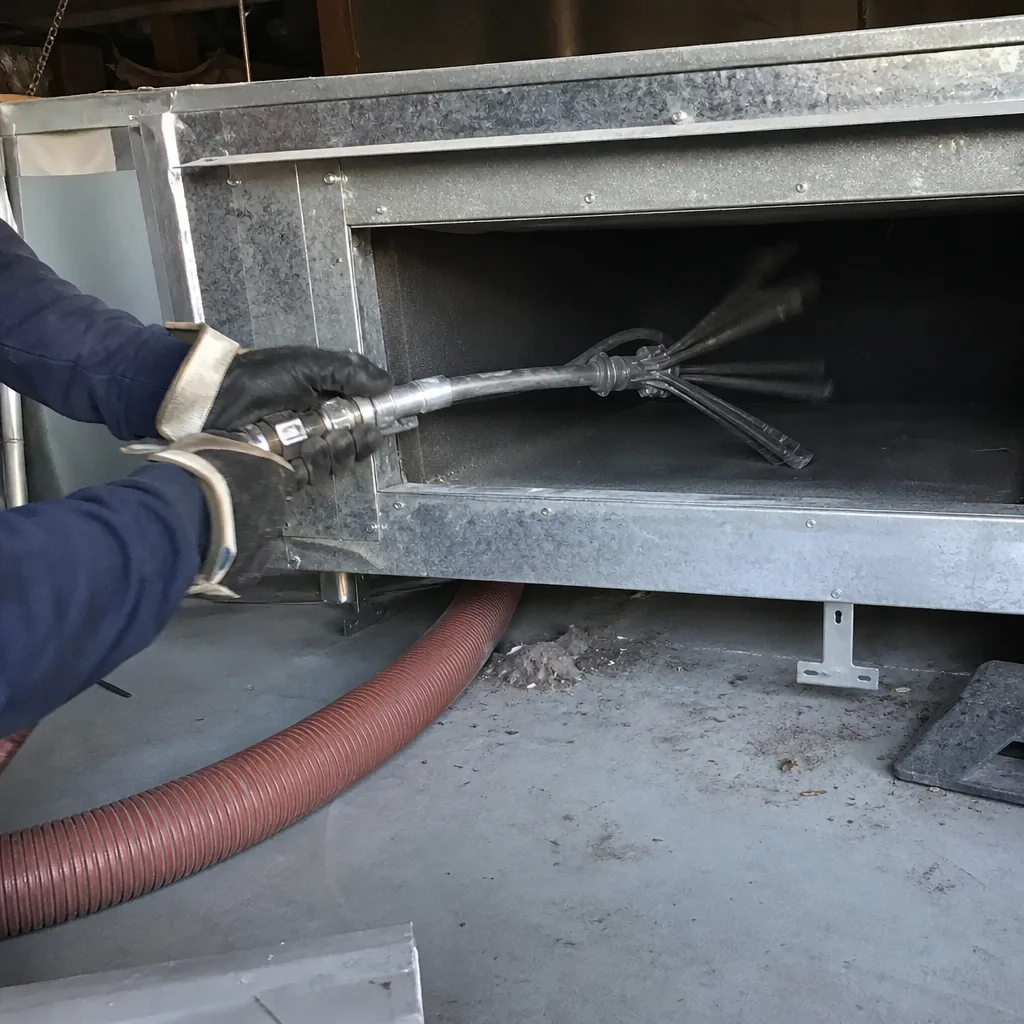
Mechanical agitation tools, powered rotary brushes or compressed air whips, dislodge debris. Because negative pressure is established first, dislodged material travels immediately to the collection filter. The sequence matters. Agitation without established negative pressure is what causes re-suspension.
Step 4: Component Cleaning
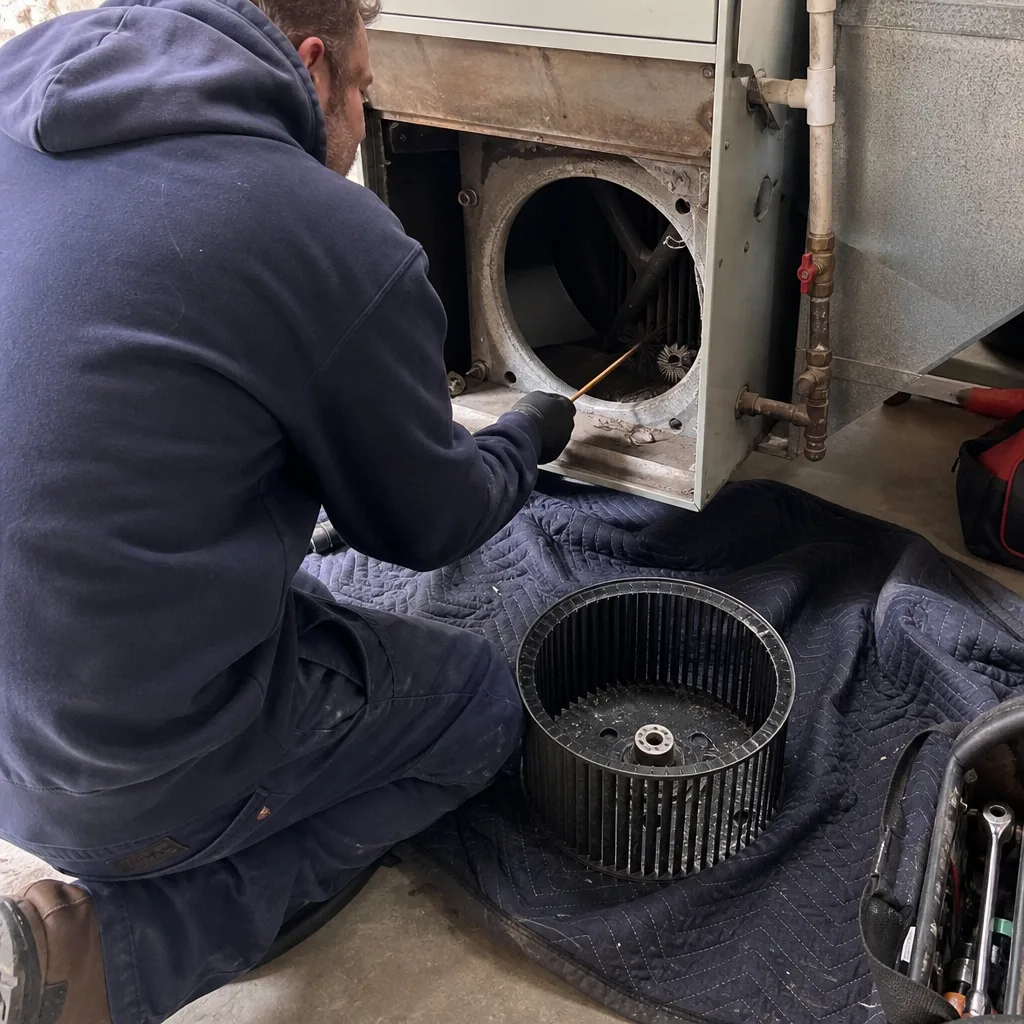
The blower motor, evaporator coil, and heat exchanger receive dedicated cleaning. These components are downstream of the ductwork; if cleaned in isolation without duct cleaning, they recontaminate immediately. If ducts are cleaned without component attention, debris migrates to these surfaces.
Step 5: Verification and Documentation
Every duct run is photographed before and after. The customer receives the photo record as a standard deliverable. This is not a courtesy; it is evidence of work performed. At CleanRun, this documented photo record has been standard since our first job in 2013. The written scope, the written price agreed before work started under Haven Standard Clause 1, and the 365-Day Done Right Promise complete the record.
Equipment on Schaumburg jobs includes Rotobrush for targeted agitation, Nikro for negative pressure collection, and Abatement Technologies HEPA filtration. These are trade-recognized brands with published specifications, not proprietary or unverifiable claims.
Cost Comparison: Real Numbers for Schaumburg
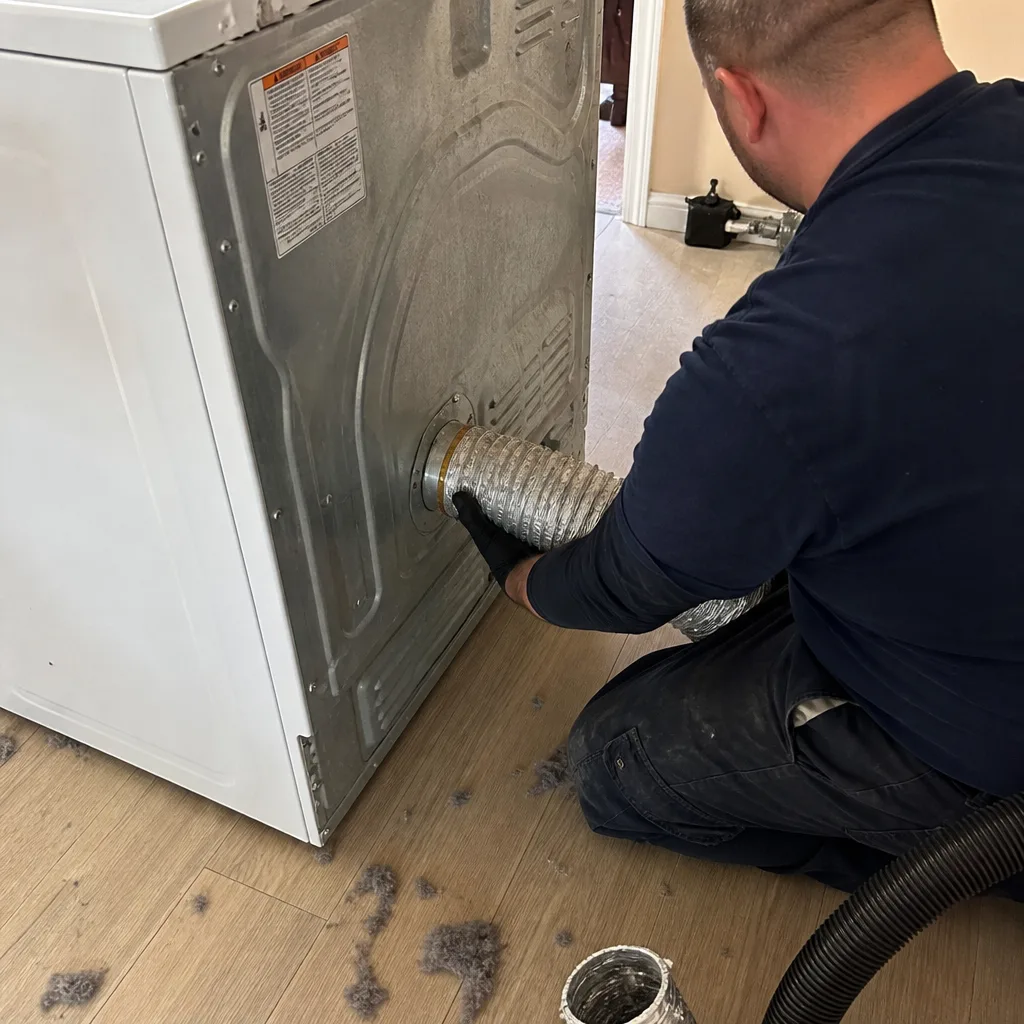
DIY has a cost. Professional work has a price. Understanding both helps you allocate spending correctly.
DIY Costs (Legitimate Scope Only)
| Item | Cost |
|---|---|
| Register removal and cleaning supplies | $15-$30 |
| Household vacuum with hose attachment (owned) | $0 |
| Dryer vent rotary brush kit | $20-$40 |
| HEPA shop-vac rental (for dryer vent capture) | $40-$60/day |
| Replacement register gaskets (recommended) | $10-$25 |
Total for legitimate DIY scope: $85-$155. Attempting full-system DIY with inadequate equipment adds $100-$300 in consumer “duct cleaning” kits that do not perform as advertised.
Professional Costs in Schaumburg
Based on our written estimates across Schaumburg in 2023-2024, whole-system air duct cleaning for a typical 2,000-2,500 square foot home ranges from $450 to $850. Variables include:
- Number of duct runs (typically 15-25 in Schaumburg homes of this size)
- Accessibility of main trunk and return plenum
- Presence of flex duct vs. rigid metal
- Additional scope: dryer vent routing, HVAC component cleaning, duct sealing
The critical distinction: professional pricing under Haven Standard Clause 1 is a written flat price per system, agreed before work starts. No per-vent add-ons. No “surprise” findings that inflate the invoice. The price you approve is the price you pay.
Competitor coupons advertising $79-$149 “whole house” duct cleaning in Schaumburg are structurally unprofitable at professional equipment and labor costs. The industry pattern: arrival, “discovery” of additional vents or “mold concern,” revised pricing at 3-5x the coupon. This is why CleanRun offers a Free Second Opinion on any written estimate. Bring a competitor’s quote; we put our number next to it in writing.
Common Mistakes to Avoid
- Using compressed air without negative pressure extraction. This blows debris through the system into living spaces. We’ve restored air quality in Schaumburg homes where this approach coated furniture with decades of accumulated dust.
- Agitating mold-like growth with household tools. Disturbing microbial contamination without containment spreads spores. If you see discoloration that might be mold, stop and call a professional. Disturbance without proper filtration makes remediation more expensive.
- Cleaning ducts but ignoring the dryer vent. Dryer vent blockages cause over 2,900 home fires annually per U.S. Fire Administration data. The vent is part of the system. Dryer Vent Cleaning in Schaumburg addresses this specifically.
- Assuming “HEPA vacuum” means HEPA containment. A HEPA shop-vac filters its exhaust, but without sufficient CFM and sealed register containment, it doesn’t prevent debris from escaping through other registers during cleaning. Filtration and airflow are separate variables.
- Cleaning without inspecting the evaporator coil. In Schaumburg’s humid summers, a dirty coil becomes a debris trap that recontaminates ducts within weeks. Component cleaning is part of proper scope, not an upsell.
- Trusting visual “clean” over measured airflow. Ducts can look acceptable at the register while harboring significant debris at elbows and in the main trunk. Camera inspection reveals actual conditions.
- Skipping the photo record. Any professional should provide documentation. If a contractor won’t show you what was in your ducts, you cannot verify what was removed. Demand the photo record as a standard deliverable, not an extra.
When to Call a Professional
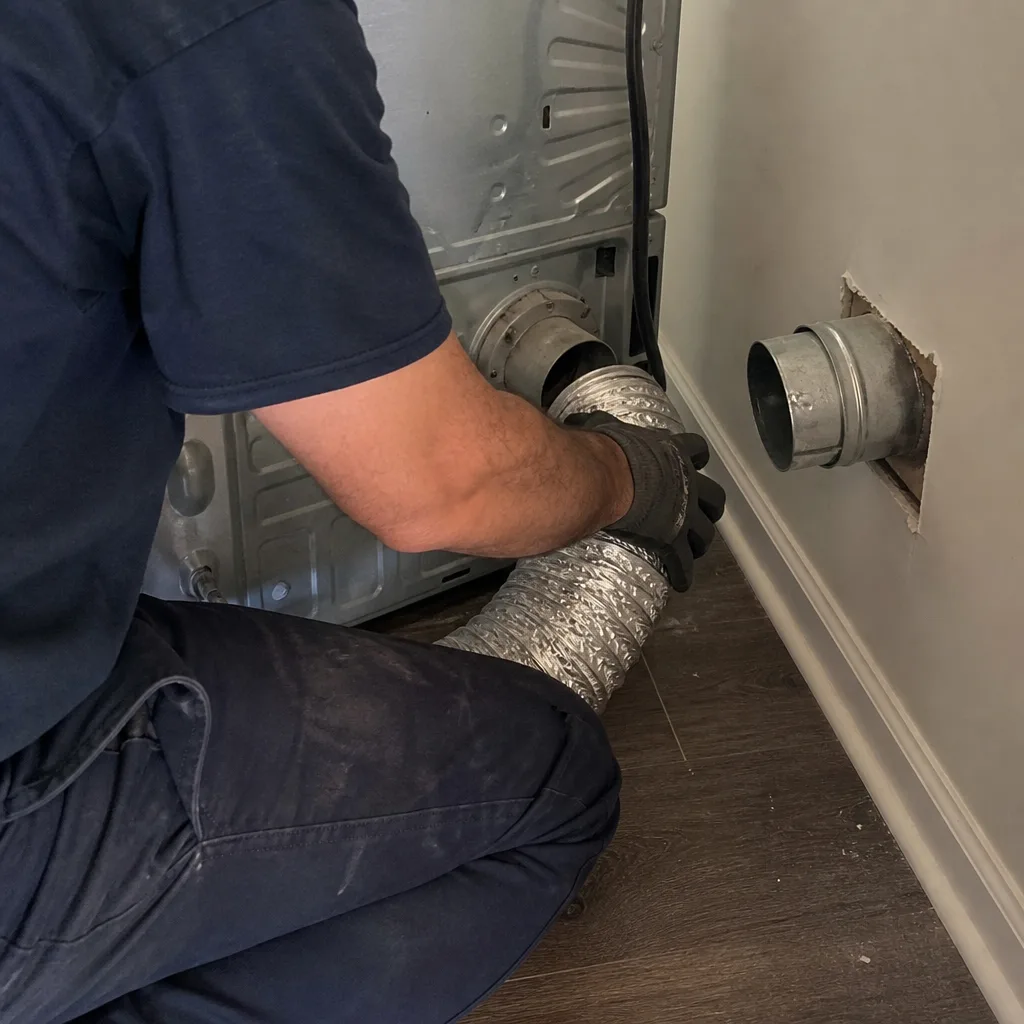
Call a professional when the decision flowchart points to professional scope, when you suspect mold or pest intrusion, when your home has never had baseline professional cleaning, or when any occupant has respiratory sensitivity. Also call when your dryer vent has bends, exceeds 25 feet, or terminates through the roof.
CleanRun Air Duct Cleaning Schaumburg offers free estimates in Schaumburg. Every estimate includes a written price before any work starts, every job includes a documented photo record of every duct run, and every technician is background-checked and uniformed under Haven Standard Clause 3: Verified Crews. Call (224) 385-0904 to schedule, or browse more guides & resources.
Frequently Asked Questions
Whole-system air duct cleaning for a typical Schaumburg home ranges from $450 to $850, with final price depending on system size, duct material, and accessibility. CleanRun provides a written flat price per system before any work starts under Haven Standard Clause 1; no per-vent add-ons, no post-arrival price changes. Call (224) 385-0904 for a free estimate with exact pricing for your home.
Low initial quotes, typically $79-$149, rely on bait-and-switch tactics: arrival, “discovery” of additional vents or contamination, then revised pricing at multiples of the original quote. The equipment and labor for proper negative-pressure duct cleaning cannot be delivered profitably at those prices. A legitimate quote specifies the full scope in writing before work begins. CleanRun offers a Free Second Opinion on any competitor’s written estimate.
Demand a documented photo record showing the inside of every duct run before and after cleaning. This has been standard on every CleanRun job since 2013. Without photographic evidence, you have only the contractor’s word. The photo record should be delivered as part of the standard job documentation, not held for additional fee.
For Schaumburg homes without specific sensitivities, professional evaluation every 3-5 years is appropriate, with cleaning as indicated by camera inspection. Homes with allergy or asthma sufferers, recent remodeling, or known pest intrusion may need more frequent service. DIY register maintenance should occur with every filter change, typically every 60-90 days during peak heating and cooling seasons.
A shop-vac can clean visible debris within the first 12 inches of accessible duct openings and can support dryer vent cleaning with proper rotary brush equipment. It cannot generate the 2,000+ CFM negative pressure required for full-system debris capture. Attempting whole-system cleaning with a shop-vac typically redistributes debris rather than removing it, temporarily worsening air quality. Match the tool to the task.
Yes. Schaumburg’s humid summers and heating-intensive winters create conditions where debris accumulation accelerates and microbial growth is possible in cool, humid duct sections. Proximity to major highways adds particulate loading. These factors don’t necessarily shorten cleaning intervals for all homes, but they make professional evaluation every 3-5 years more important than in drier, less trafficked locations.
The Bottom Line
DIY air duct cleaning has a narrow but legitimate role: register maintenance, visible debris at duct openings, and straight dryer vent runs under 25 feet. Full-system cleaning requires equipment that generates 2,000-4,500 CFM negative pressure with sealed containment, professional access point placement, and component-level attention to the evaporator coil, blower, and heat exchanger. The cost of inadequate DIY is not merely wasted effort; it’s temporary air quality degradation that can exceed pre-cleaning conditions. For Schaumburg homeowners, the decision framework is straightforward: match the tool to the physics of the task, demand written pricing and photographic documentation from any professional, and prioritize professional scope when household sensitivities or system age indicate.
Written by Tomas Reyes, Owner at CleanRun Air Duct Cleaning Schaumburg, serving Schaumburg since 2013.