
Last updated September 23, 2026
Whole-system duct and dryer vent check with before-and-after photos - you see exactly what came out of your vents
That "$99 whole-house special" is a bait ad - the real number appears once they are in your hallway, or the "clean" is a shop-vac at the register. We photograph the inside of your ducts before and after instead.
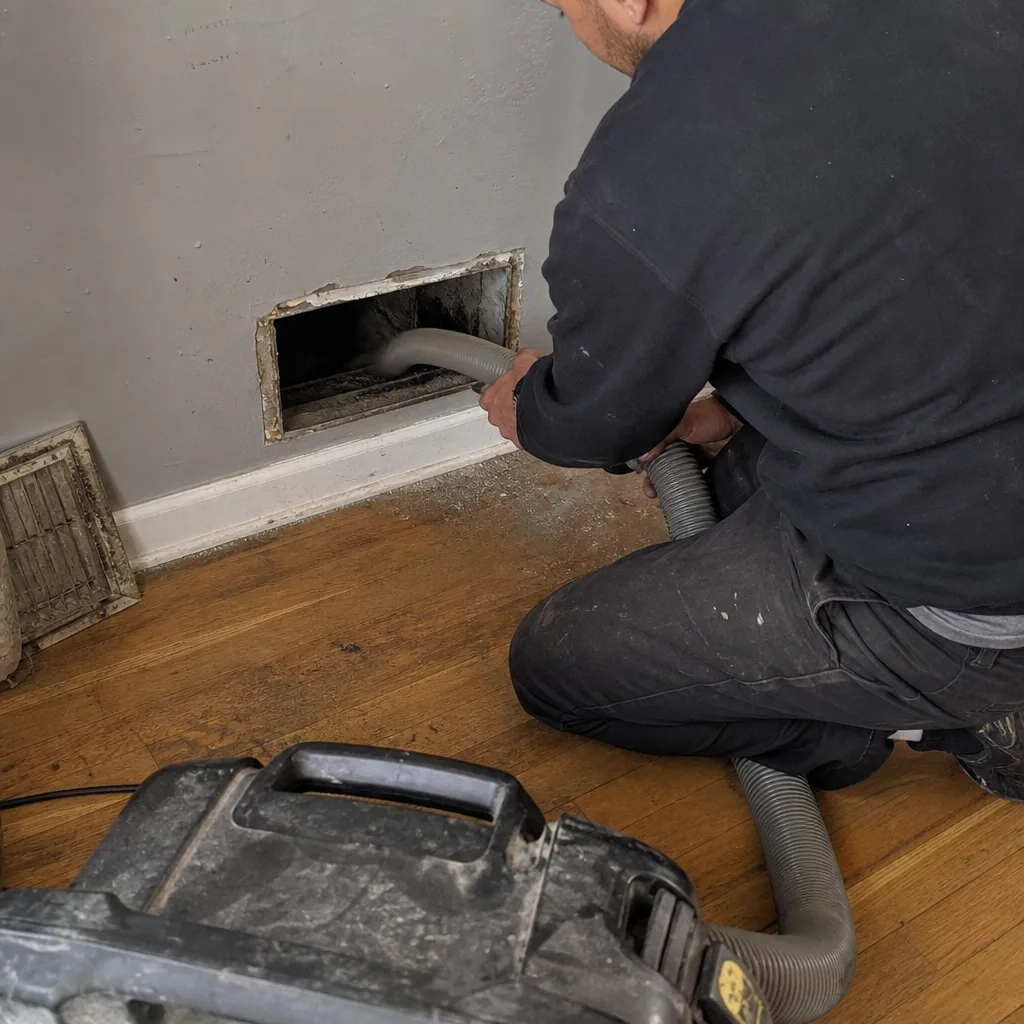 Before
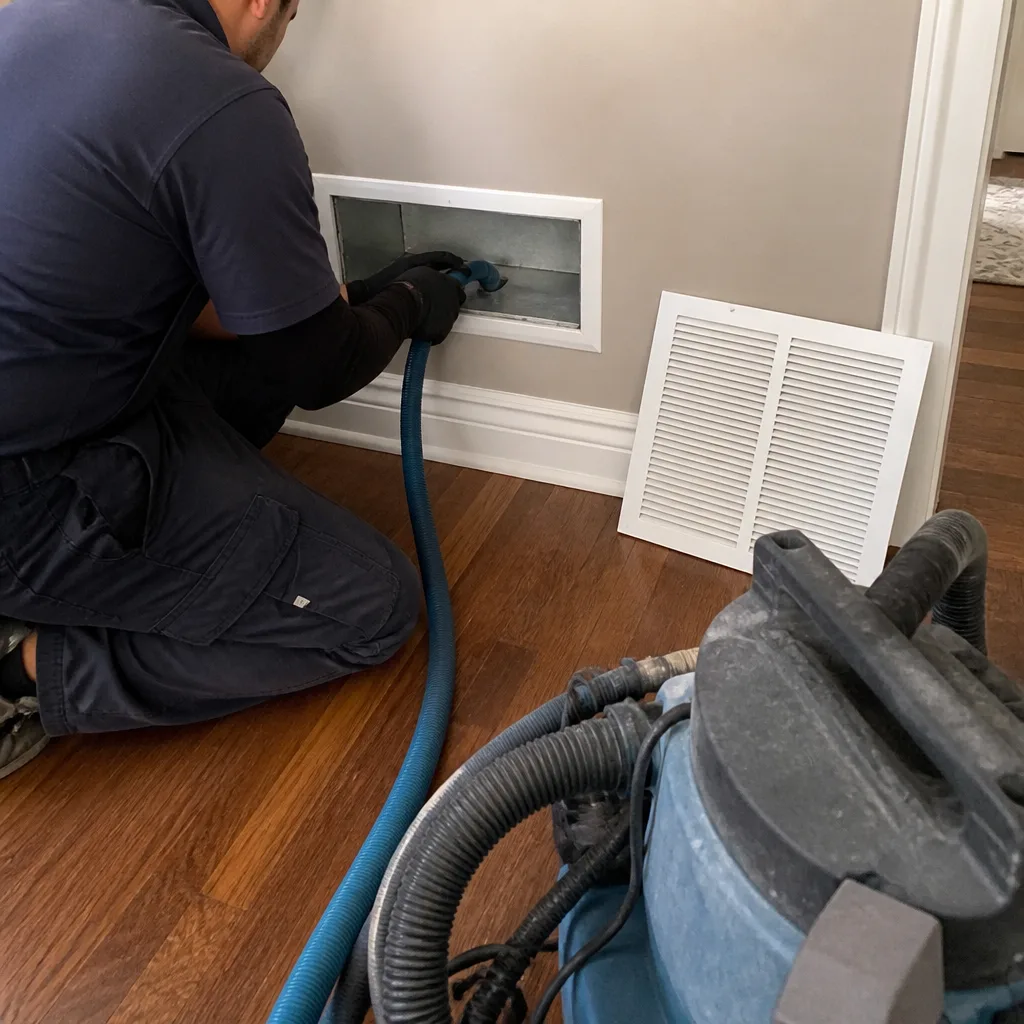 After
After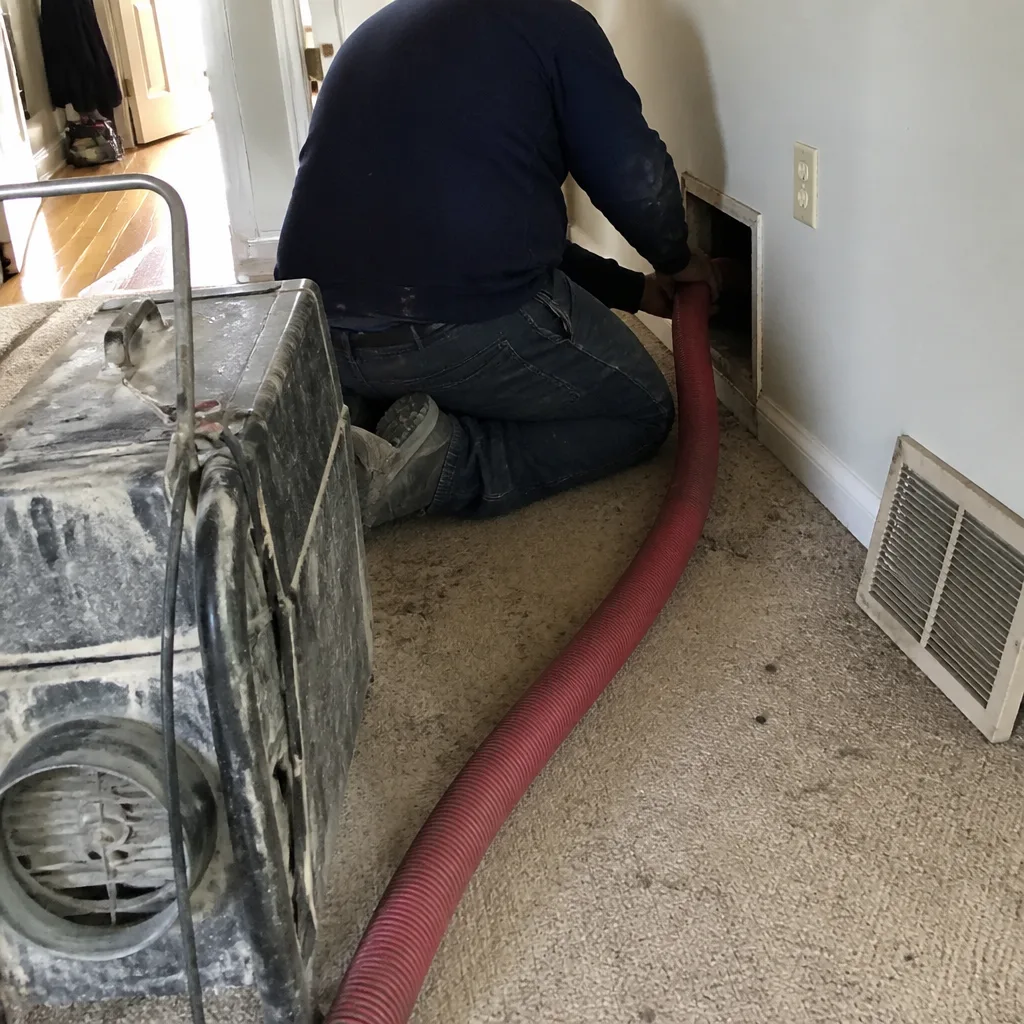 Before
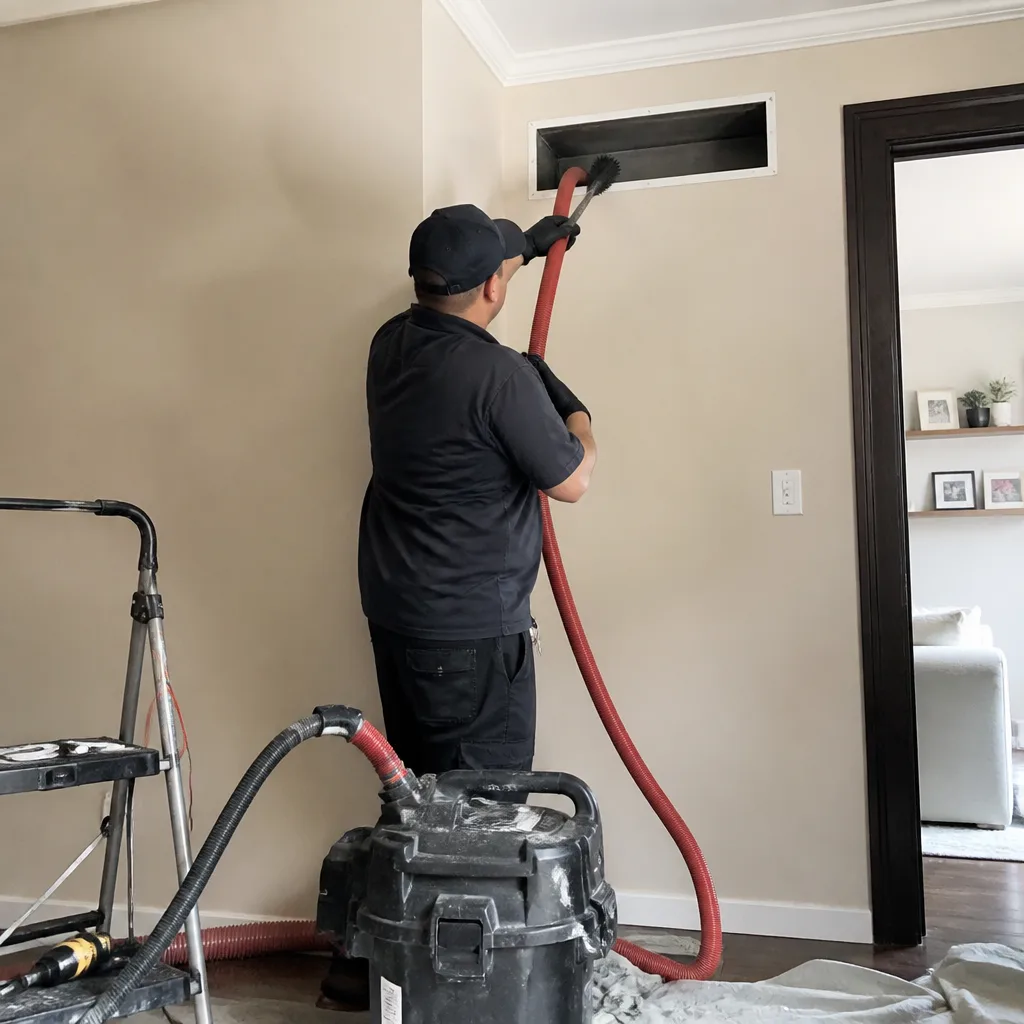 After
After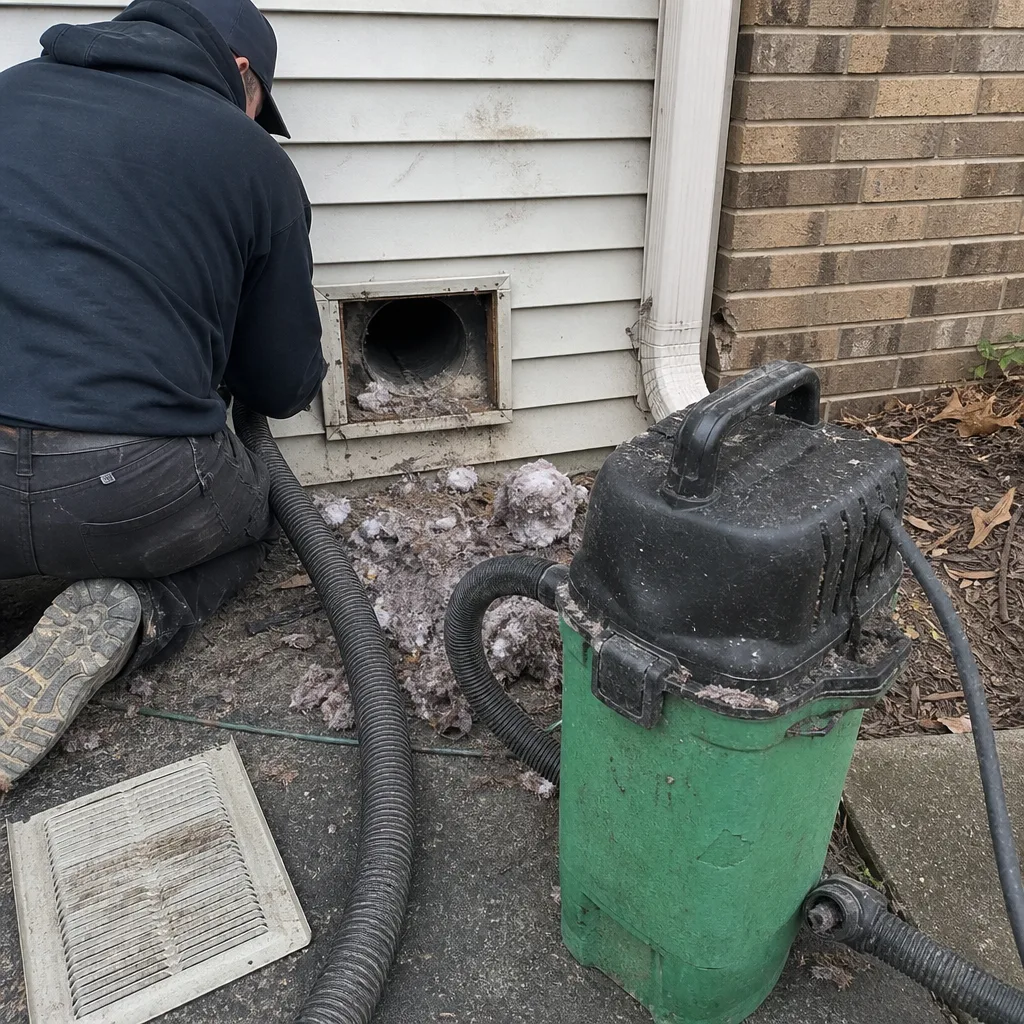 Before
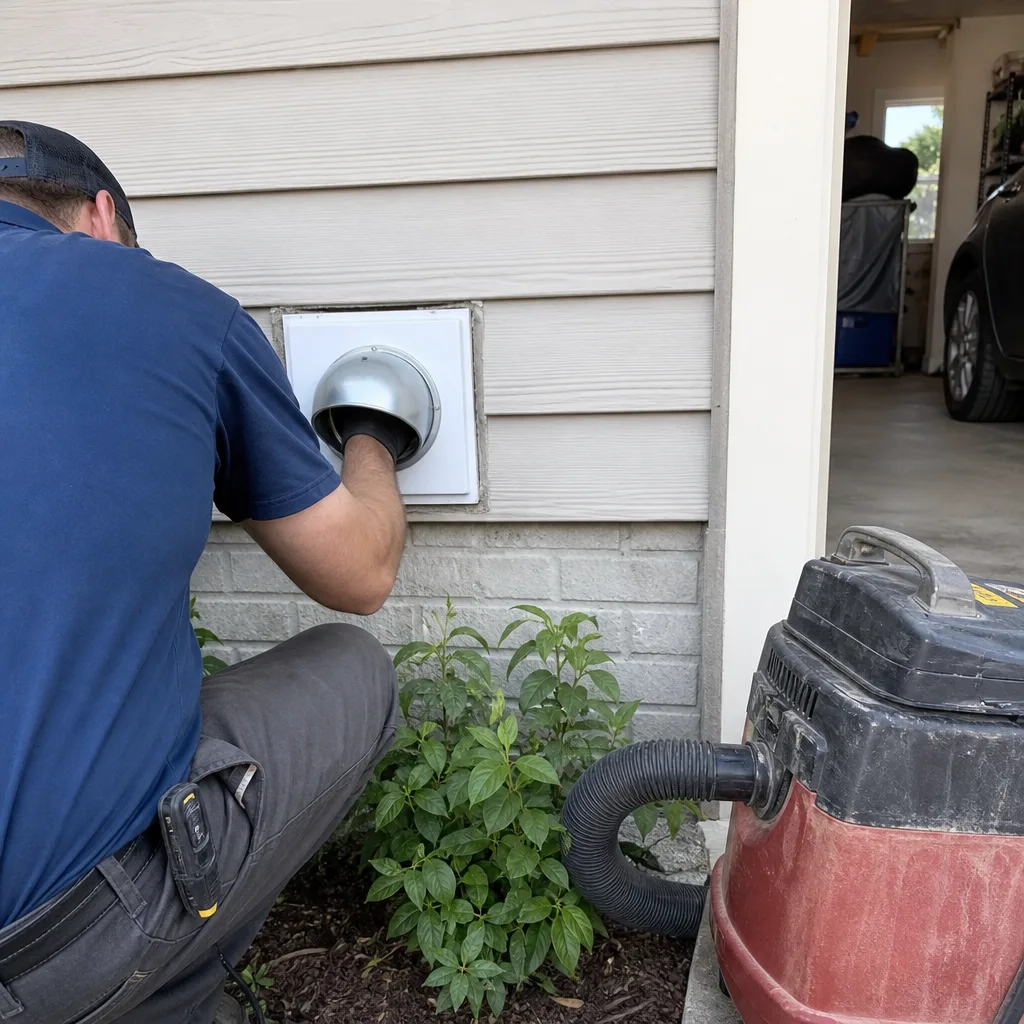 After
AfterThe Complete Guide to Air Duct Cleaning in Schaumburg
A shop-vac generating 150 CFM of suction cannot clean a duct system that requires 2,000-4,000 CFM to move debris to a collection point. Yet most $79 coupon jobs in Schaumburg use exactly that equipment. This guide shows you what professional air duct cleaning actually involves, what the inside of Schaumburg ductwork typically looks like after 15-30 years of service, and how to tell whether a contractor delivered real work or just vacuum noise. You’ll learn the equipment standards, the documentation you should receive, and the specific questions to ask before anyone touches your registers.
Quick Answer
Our Air Duct Cleaning services in Schaumburg cost $400-$900 for a typical single-family home with 8-14 supply registers, uses negative-pressure extraction equipment pulling 2,000+ CFM, and should include a written price before work starts plus photographic documentation of every duct run. The process takes 3-5 hours for a complete system and should follow NADCA ACR standards for contact vacuuming and post-cleaning verification.
Table of Contents
- What Professional Air Duct Cleaning Actually Involves
- Schaumburg Ductwork: What We Actually Find
- Trunk-and-Branch vs. Radial Plenum Systems
- The NADCA ACR Standard: Beyond the Logo
- How to Read a Real Job Record
- Equipment That Actually Matters
- Before-and-After Documentation: What to Demand
- Pricing in Schaumburg: What You Should Actually Pay
BeforeAfterWhat Professional Air Duct Cleaning Actually Involves
Air duct cleaning is the mechanical removal of debris from the interior surfaces of a forced-air distribution system. That system includes supply ducts (the runs that carry heated or cooled air to your rooms), return ducts (the larger channels that pull air back to the furnace), the plenum (the sheet-metal chamber directly above or below your air handler), and the registers or grilles where air enters your living space.
The process is not complicated, but it is specific. Here’s what a complete cleaning entails:
- System inspection and access. Technicians cut access panels at strategic points - typically the plenum and main trunk lines - to insert cameras and cleaning tools. These panels are sealed after work completes.
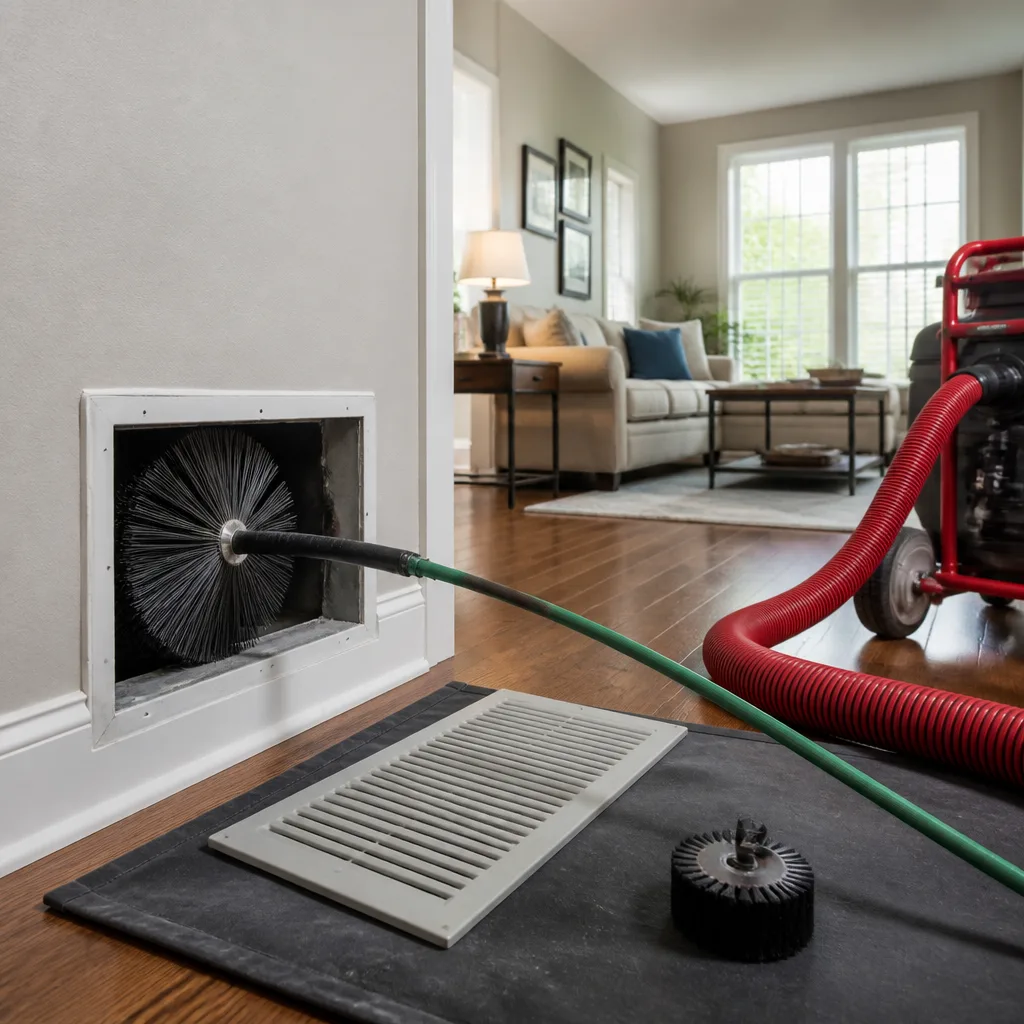
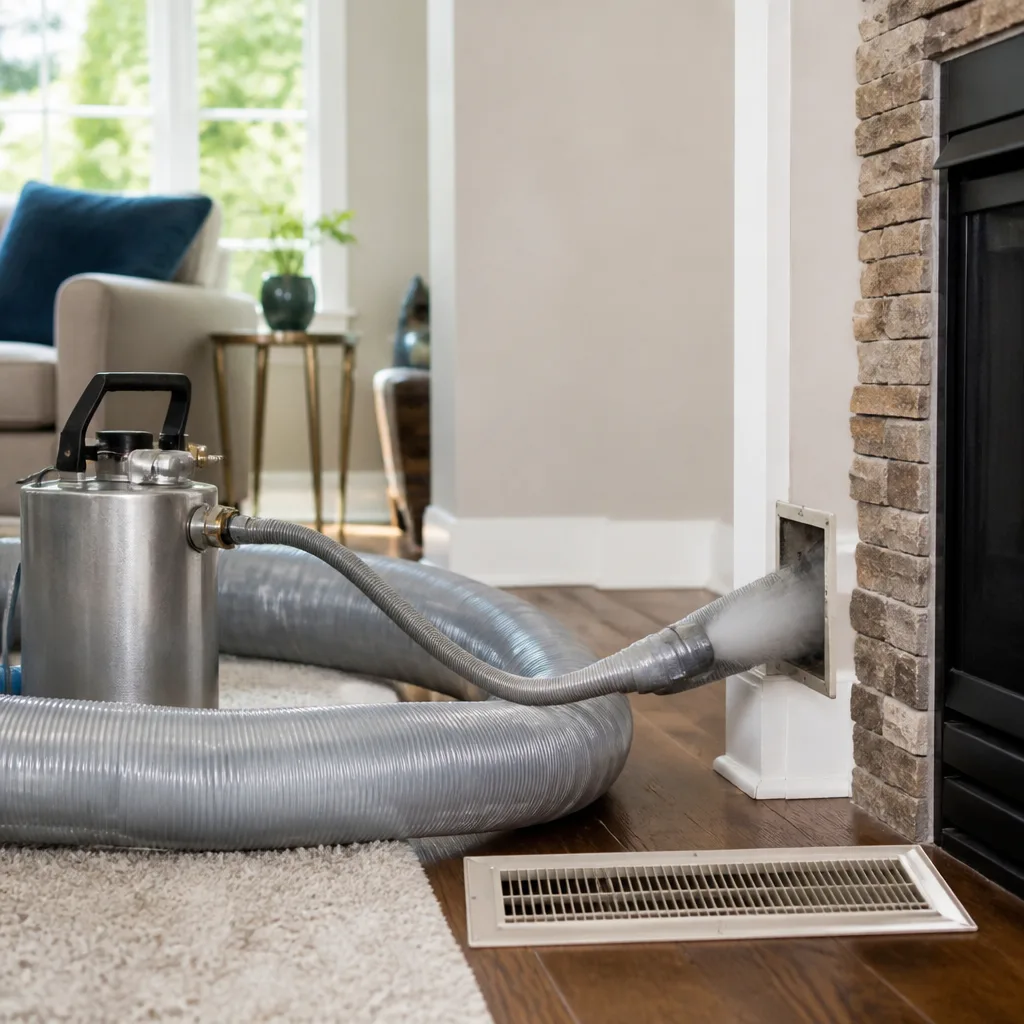
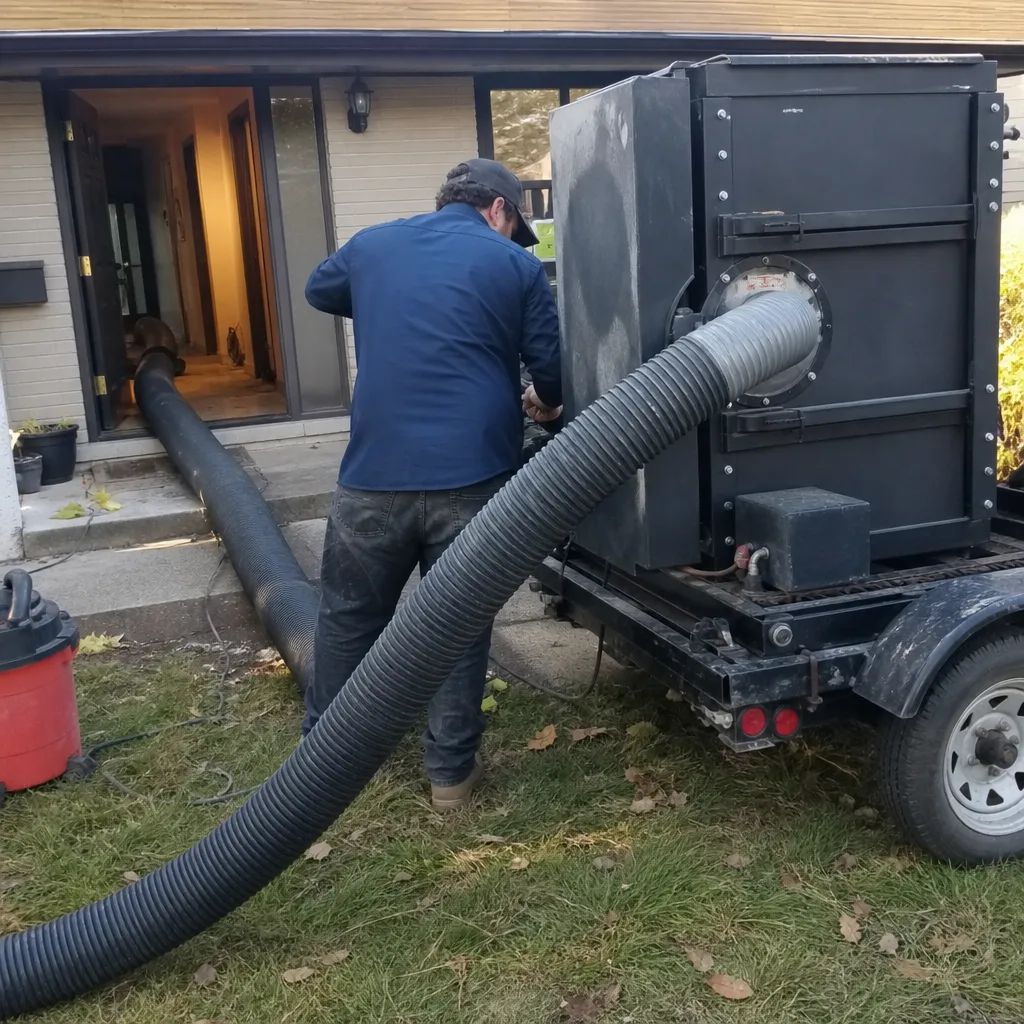
- Negative-pressure extraction. A large vacuum collection unit, typically mounted on a truck or portable cart, creates suction at 2,000-4,000 CFM (cubic feet per minute). This is the critical number. The vacuum attaches to the trunk line, pulling continuous negative pressure through the entire system while agitation tools loosen debris at each register.
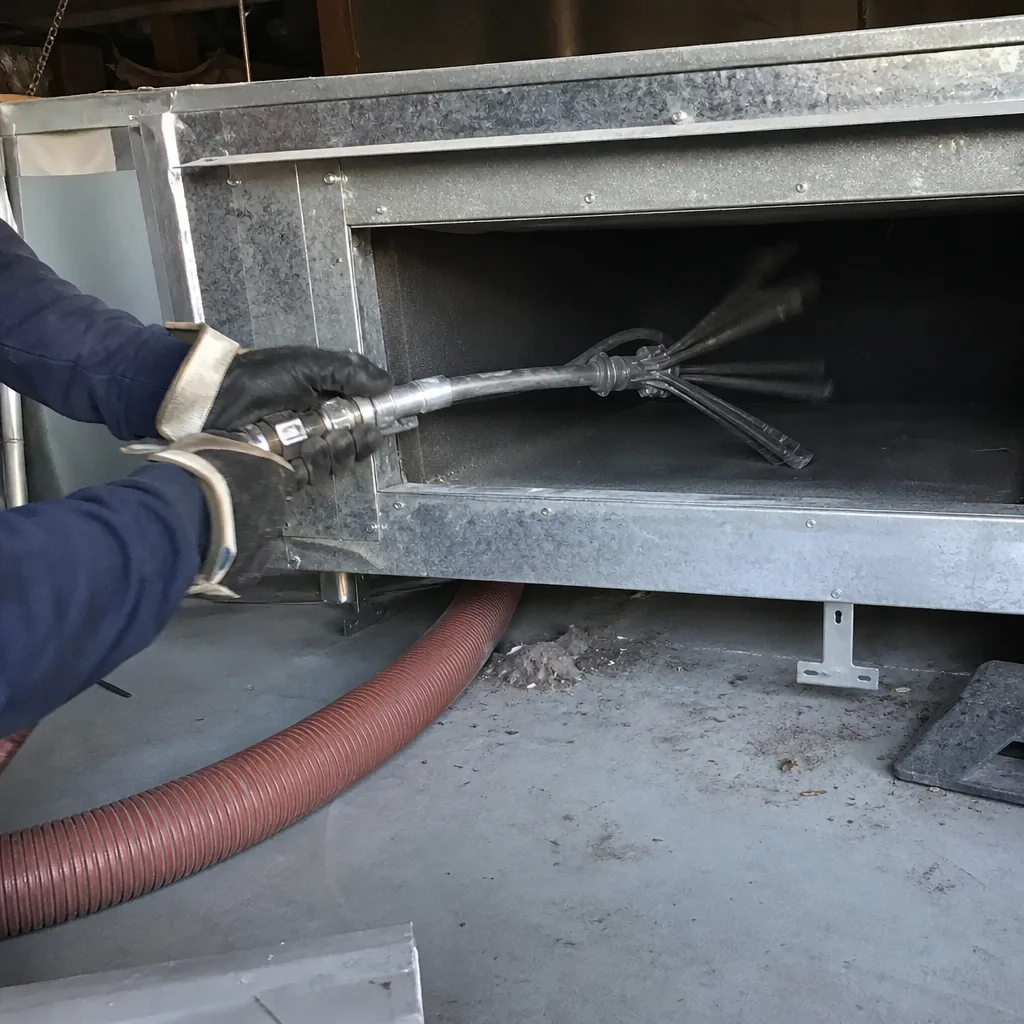
- Contact vacuuming and agitation. Rotating brushes, air whips, or compressed-air tools physically dislodge debris from duct walls. The negative pressure captures this debris at the collection point, preventing it from entering your home.
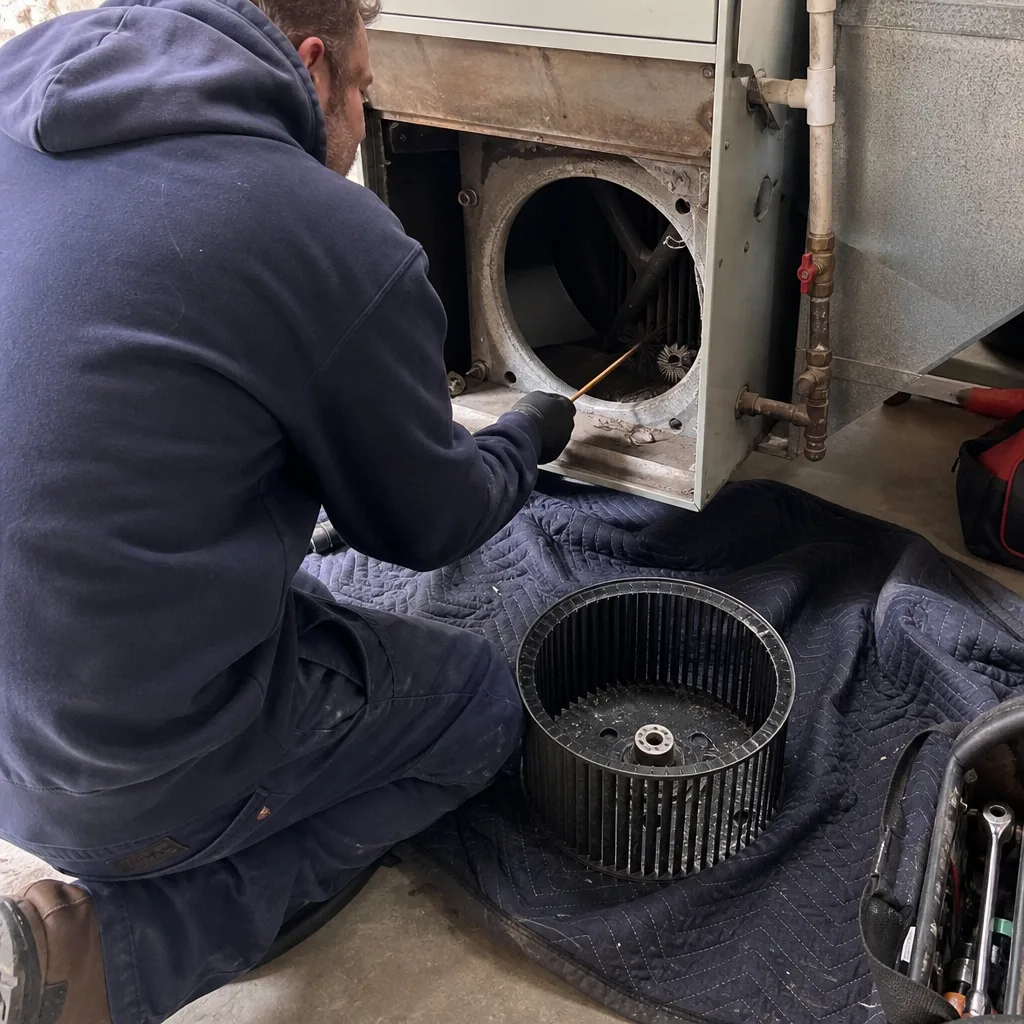
- Component cleaning. The blower fan, evaporator coil, and heat exchanger receive separate attention. These components sit downstream of the ductwork and affect airflow independently.
- Post-cleaning verification. The technician photographs accessible areas, measures airflow or pressure differential, and confirms debris removal.
What professional cleaning does not involve: spraying chemicals into ducts without mechanical removal, using a household vacuum with a long hose, or removing only register covers to wipe visible surfaces. These approaches leave the majority of debris in place.
In Schaumburg, where winter heating runs six months and summer humidity peaks above 70%, duct systems work harder than in milder climates. The thermal expansion and contraction of metal ductwork, combined with pollen loads from the surrounding prairie and oak-savanna ecosystem, produces a specific debris profile we’ll detail in the next section.
Schaumburg Ductwork: What We Actually Find
Schaumburg’s housing stock is dominated by homes built between 1985 and 2005 - the boom years of the Woodfield area expansion, Weathersfield, and the Pleasant Acres subdivisions. These homes share common ductwork characteristics that determine what accumulates and where.
Construction debris in older systems. Homes built before 1990 often have ductwork that was never cleaned after construction. We’ve photographed drywall dust, wood shavings, and insulation fragments packed 2-3 inches deep at the first elbow below the plenum. In a 1987 ranch near Schaumburg Road and Roselle, the camera showed a complete blockage of a 6-inch branch line - the original construction debris had compressed over 35 years into a solid mat.
Fiberglass particle shedding. Ducts lined with fiberglass insulation, common in homes built 1990-2005, shed particles as the binder degrades. These appear as gray, fuzzy accumulation on duct floors. The material is not hazardous in the way asbestos is, but it circulates until mechanically removed. In Schaumburg’s climate, with wide temperature swings between January and July, thermal cycling accelerates this shedding.
Rodent evidence in uncapped lines. Branch lines that terminate in unused basement spaces or were capped with tape rather than permanent seals attract mice. We find droppings, nesting material, and in some cases deceased animals. This is more common in Schaumburg’s older sections - the original 1950s-1970s homes near the intersection of Schaumburg and Roselle Roads - where basement finishing left original duct configurations intact.
Pollen and organic matter. The surrounding Cook County forest preserves and prairie restoration areas contribute significant pollen loads. Without high-MERV filtration, this material deposits in return ducts and blower compartments. During peak season - late May through early July - we’ve measured visible pollen accumulation in return plenums at rates of 1/4 inch per season.
Here’s what this means practically: a Schaumburg home built in 1995 with original ductwork and standard 1-inch fiberglass filters likely contains measurable debris in every branch line, significant accumulation at trunk elbows, and some degree of blower fan loading. The question is not whether cleaning is needed, but whether the cleaning method can actually remove it.
Trunk-and-Branch vs. Radial Plenum Systems
The physical layout of your ductwork determines how it must be cleaned. Most Schaumburg homeowners have never seen their system’s architecture, but it governs every aspect of effective service.
Trunk-and-branch systems dominate homes built 1985-2005. A large rectangular trunk line runs the length of the basement or crawl space, with smaller round or rectangular branch lines splitting off to individual rooms. The trunk is typically 8×20 inches or larger; branches are 6 or 7 inches in diameter. Cleaning requires:
- Access panels cut into the trunk at both ends
- Negative-pressure attachment at the plenum or trunk midpoint
- Agitation tools inserted through each branch register, working back toward the trunk
- Sequential isolation of branches to maintain suction velocity
Without sequential isolation, the vacuum pulls air from the path of least resistance - usually the shortest branch - and leaves distant lines uncleaned. This is the most common failure mode in coupon-grade work.
Radial plenum systems appear in some 1970s-1980s Schaumburg homes and in certain builder models from the 1990s. All ducts originate directly from a central plenum, like spokes from a hub. There is no trunk line. Cleaning requires:
- Multiple access points in the plenum itself
- Shorter agitation runs, but more of them
- Careful management of plenum pressure to prevent debris redistribution
The radial design is actually harder to clean thoroughly. With no trunk to serve as a collection highway, each duct must be individually isolated and evacuated. A contractor using inadequate vacuum power will leave significant debris in radial systems because the suction dissipates across multiple short runs.
We identify system type during our initial inspection, before quoting. The written scope specifies which configuration you have and how we’ll address it. This matters for pricing: radial systems typically require 20-30% more labor time due to access complexity.
The NADCA ACR Standard: Beyond the Logo
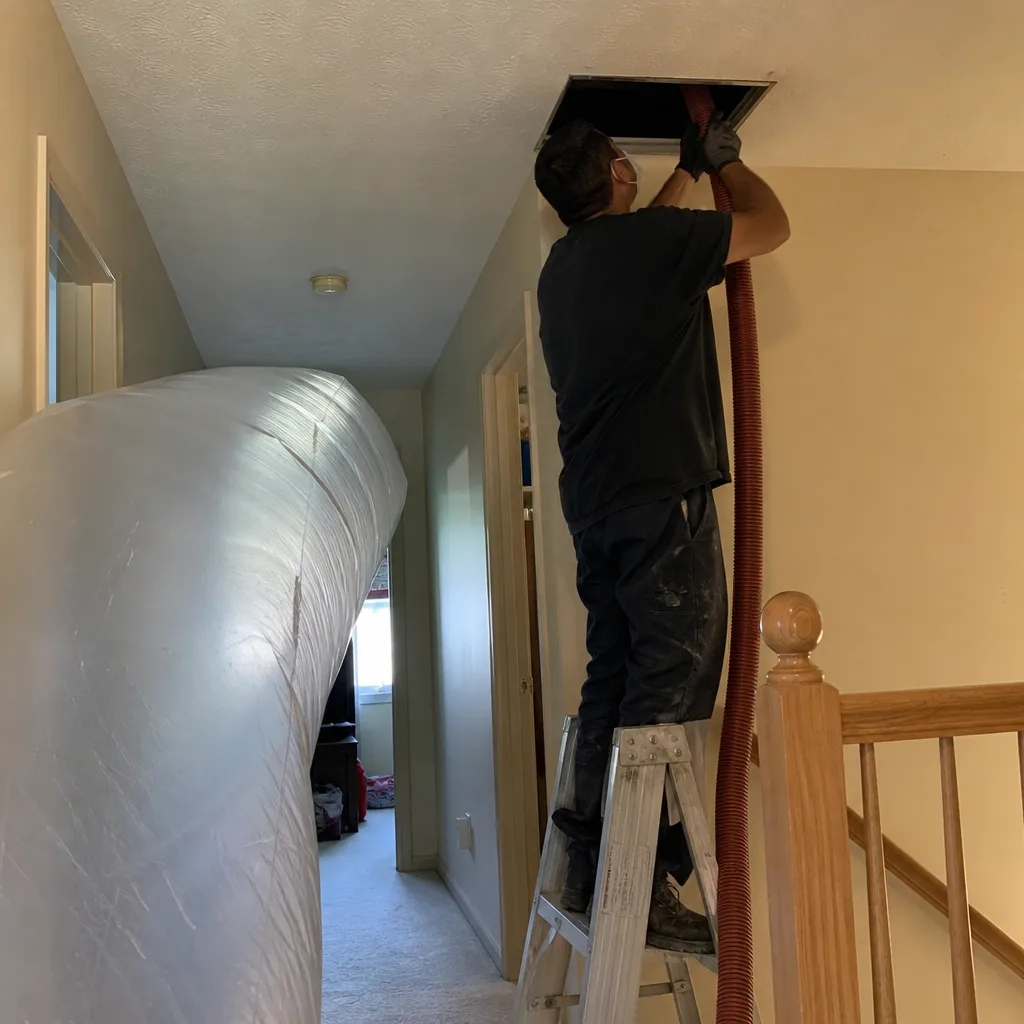
The National Air Duct Cleaners Association publishes the Assessment, Cleaning, and Restoration of HVAC Systems standard - ACR, last revised in 2021. Many contractors display the NADCA logo. Few follow the standard in full. Here’s what it actually requires, in specific terms that let you verify compliance.
Suction specifications. ACR Section 6.2.1 requires that collection equipment maintain sufficient airflow to prevent debris release during agitation. The practical threshold is 2,000 CFM for residential systems, verified with an anemometer at the vacuum inlet. We document this measurement on every Schaumburg job. A shop-vac or portable extractor running 400-800 CFM does not meet this specification regardless of marketing claims.
Contact vacuuming protocol. ACR Section 6.3 mandates that debris be dislodged by mechanical contact - brushes, whips, or compressed air - not merely pulled by suction. Suction alone removes only loose surface material. The standard requires that agitation tools contact all duct surfaces, including the bottom of horizontal runs where debris settles. This is why rotary brush systems like Rotobrush are specified: the brush head physically scrubs the duct wall while vacuum captures dislodged material.
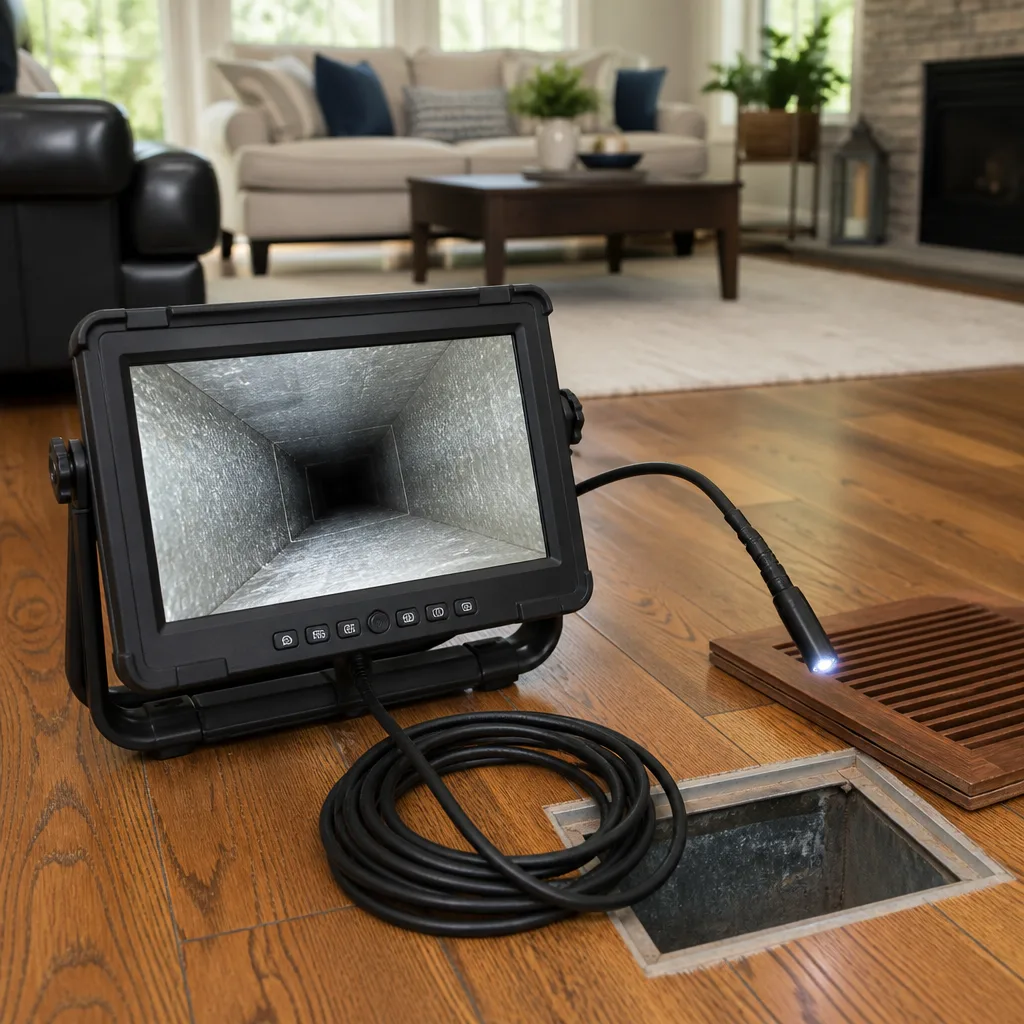
Post-cleaning verification. ACR Section 7 requires visual inspection after work completion. The standard accepts either direct visual inspection (camera or borescope) or surface sampling. We use photographic documentation - the camera shows the duct wall after cleaning, with no visible debris accumulation. This photo becomes part of your job record.
What ACR does not require: chemical biocides, ozone treatment, or sealant application. These are optional services with limited EPA endorsement for routine residential cleaning. We do not sell them as standard.
The NADCA logo on a website means nothing without these specific practices. Ask your contractor: What CFM does your vacuum pull? What agitation method contacts the duct surface? How do you verify debris removal? Answers should be immediate, specific, and documented in writing.
How to Read a Real Job Record
Every CleanRun job produces a written record. We use this format because it lets Schaumburg homeowners verify what was promised, what was found, and what was delivered. Here’s an actual job record from a 1998 colonial in the Wynstone area, with identifying details removed:
Property: Single-family, 2,400 sq ft, basement furnace
System type: Trunk-and-branch, galvanized steel
Supply registers: 12
Return registers: 3
Linear feet of duct photographed: 187 ft (all accessible supply and return runs)
Debris found: 1.5-2 inch accumulation at first elbow below plenum; moderate fiberglass particle shedding in branches 3, 7, and 9; rodent droppings in uncapped branch to unfinished storage area
Equipment used: Abatement Technologies portable HEPA extraction unit (2,400 CFM verified); Rotobrush brush-and-vac system for branch lines; compressed-air whip for trunk line
Written price agreed: $680 (Haven Standard Clause 1: Price Fixed Before Work)
Duration: 4.5 hours
Photos delivered: 47 before/after pairs, timestamped, geotagged
Warranty: 365-Day Done Right Promise
This record is not exceptional. It is standard. The homeowner received it by email within 24 hours of job completion, with all photos in a downloadable folder.
What to look for in any contractor’s documentation:
- Specific register count. “12 supply, 3 return” is verifiable. “Whole house” is not.
- Linear feet photographed. This proves coverage. A contractor who cleaned 8 branch lines but only photographed 3 has not documented their work.
- Debris description, not judgment. “2-inch accumulation” is factual. “Very dirty” is subjective.
- Equipment identified by brand and specification. You can look up Abatement Technologies or Rotobrush independently.
- Price in writing, before work. Not an estimate. A fixed price.
If a contractor cannot produce a record in this format, they are not documenting their work. Undocumented work cannot be verified, warranted, or disputed.
Equipment That Actually Matters
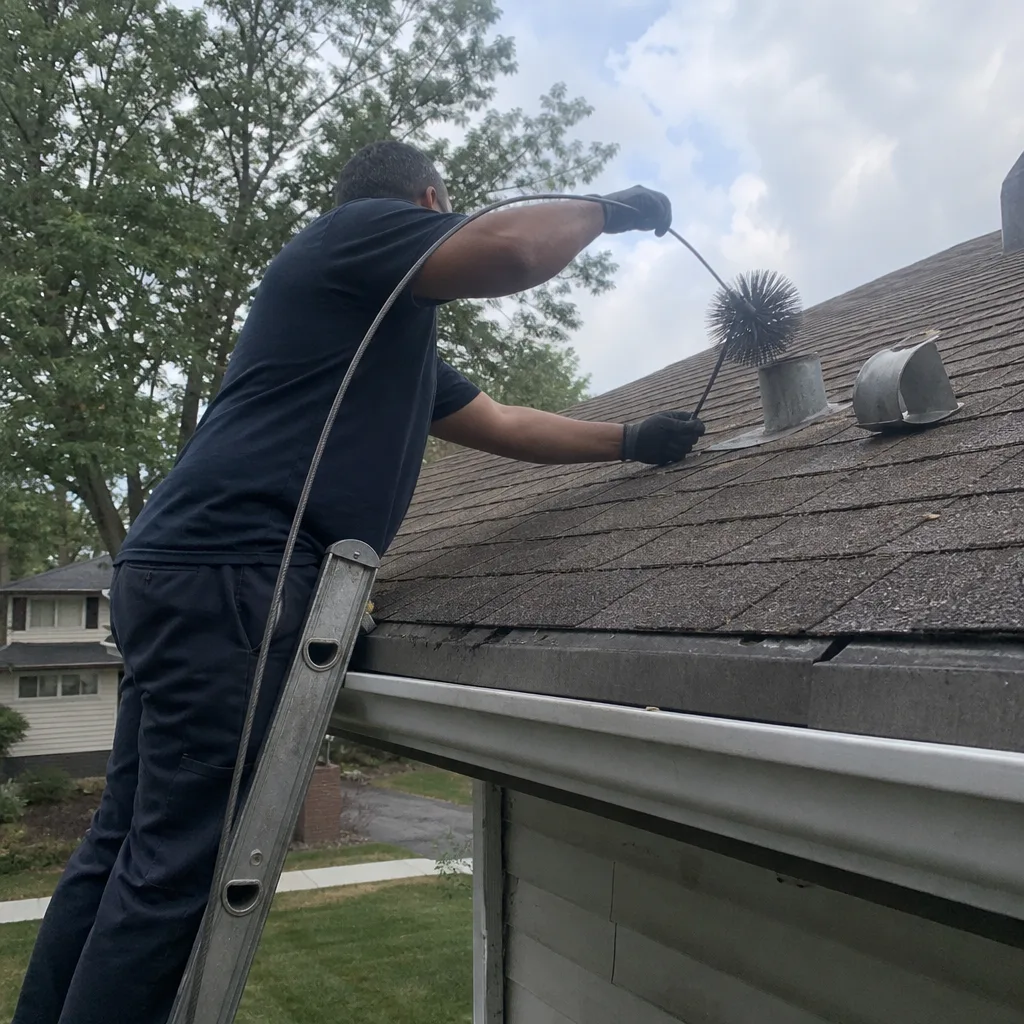
The brands and specifications of cleaning equipment determine whether debris is removed or merely redistributed. Here’s what professional-grade equipment looks like, with the specifications that matter.
Negative-pressure extraction units. These are the large vacuums that create system-wide suction. Professional units from Abatement Technologies and Nikro pull 2,000-4,000 CFM through 8-10-inch hoses. They include HEPA filtration (99.97% capture at 0.3 microns) to prevent debris release at the exhaust. Portable units are used when truck-mounted equipment cannot access the property - common in Schaumburg’s townhome developments with limited parking.
Agitation systems. Rotobrush manufactures rotary brush-and-vacuum systems with powered brush heads that scrub duct walls while simultaneously vacuuming dislodged debris. The brush head is sized to the duct diameter - 6-inch brushes for 6-inch branches, 8-inch for larger lines. Compressed-air whips from Nikro use multiple tentacles that thrash against duct walls when triggered, effective for trunk lines and rectangular ducts where rotary brushes cannot navigate.
Inspection cameras. Before-and-after documentation requires borescope cameras with LED illumination, capable of photographing the full circumference of a duct interior. We use systems from Abatement Technologies that record 1080p video and geotag still images.
Air quality monitoring. Honeywell and Aprilaire manufacture particle counters and differential pressure gauges that verify system performance after cleaning. A properly cleaned system should show reduced pressure drop across the evaporator coil and reduced particle counts at supply registers.
What to avoid: Any contractor who cannot name their equipment brands, who uses shop-vacs or household vacuum cleaners, or who describes their tools only as “commercial-grade” without specifications. “Commercial-grade” has no technical meaning. CFM, HEPA rating, and brand name do.
We publish our equipment roster because customers in Schaumburg research before calling. Guardsman protective products are used for floor and furnishing protection during service - another detail that separates professional preparation from rushed entry.
Before-and-After Documentation: What to Demand
The single most effective way to evaluate an air duct cleaning job is to see the inside of your ducts before and after. Most homeowners never receive this. Most contractors never produce it. Here’s what proper documentation includes and how to interpret it.
Photo standards. Each image should show:
- The location (branch line number, distance from plenum, or register identifier)
- Timestamp and date
- Full circumference or at least 180 degrees of duct wall
- Consistent lighting and focus for before/after comparison
What to look for in “before” photos. Debris should be visible and identifiable: dust accumulation with measurable depth, construction debris with recognizable composition, or biological growth with characteristic coloration. Blurry photos of dark ducts prove nothing. Clear photos of light debris prove little. The photo should make the need for cleaning obvious without captioning.
What to look for in “after” photos. Duct walls should show bare metal or intact insulation with no visible debris. Some staining is normal and does not affect performance. The absence of the debris shown in the “before” photo is the standard - not cosmetic perfection.
Video documentation. Continuous video from a borescope camera provides stronger evidence than still photos, which can be selectively composed. We offer video records on request, particularly for jobs with significant debris or for customers with health concerns who want to show medical providers.
The documentation you should receive. Within 24 hours of job completion, you should have: all photos in a downloadable format, a written summary of work performed, the original written price agreement, and warranty terms. This is your job record. It is the basis for any future warranty claim, resale disclosure, or dispute.
In Schaumburg’s competitive real estate market, documented duct cleaning can support disclosure statements. A job record with photos, fixed price, and warranty terms adds verifiable value that “ducts cleaned by previous owner” does not.
Pricing in Schaumburg: What You Should Actually Pay
Air duct cleaning pricing in Schaumburg follows a predictable structure based on system size and configuration. The $79-$129 coupon jobs that dominate mailers and online ads are not priced for complete cleaning. They are priced for entry, with upsells required for any meaningful work.
Here’s how actual pricing breaks down for Schaumburg homes:
| System Size | Register Count | Price Range | Typical Duration |
|---|---|---|---|
| Small (condo/townhome) | 6-8 supply, 1-2 return | $350-$500 | 2.5-3.5 hours |
| Medium (typical single-family) | 9-14 supply, 2-3 return | $500-$800 | 3.5-5 hours |
| Large (custom/expanded) | 15+ supply, 4+ return, multiple zones | $800-$1,400 | 5-8 hours |
Additional factors that affect price:
- System accessibility. Furnaces in cramped crawl spaces or attic installations require additional labor time.
- Debris severity. Construction debris blockages or rodent contamination require remediation beyond standard cleaning.
- Duct repair needs. Disconnected joints, failed seals, or damaged insulation identified during cleaning require separate scope and pricing.
- Component cleaning. Evaporator coil and blower fan cleaning are typically quoted separately from duct cleaning.
The critical pricing principle, per Haven Standard Clause 1: the written price is the price. Not an estimate that balloons when the technician arrives. Not a base price with per-register add-ons. One flat price per system, agreed before work starts, with all inclusions specified in writing.
We do not offer per-vent pricing. Per-vent pricing incentivizes contractors to minimize time per register, reducing cleaning quality. We price by system because the system must function as a whole.
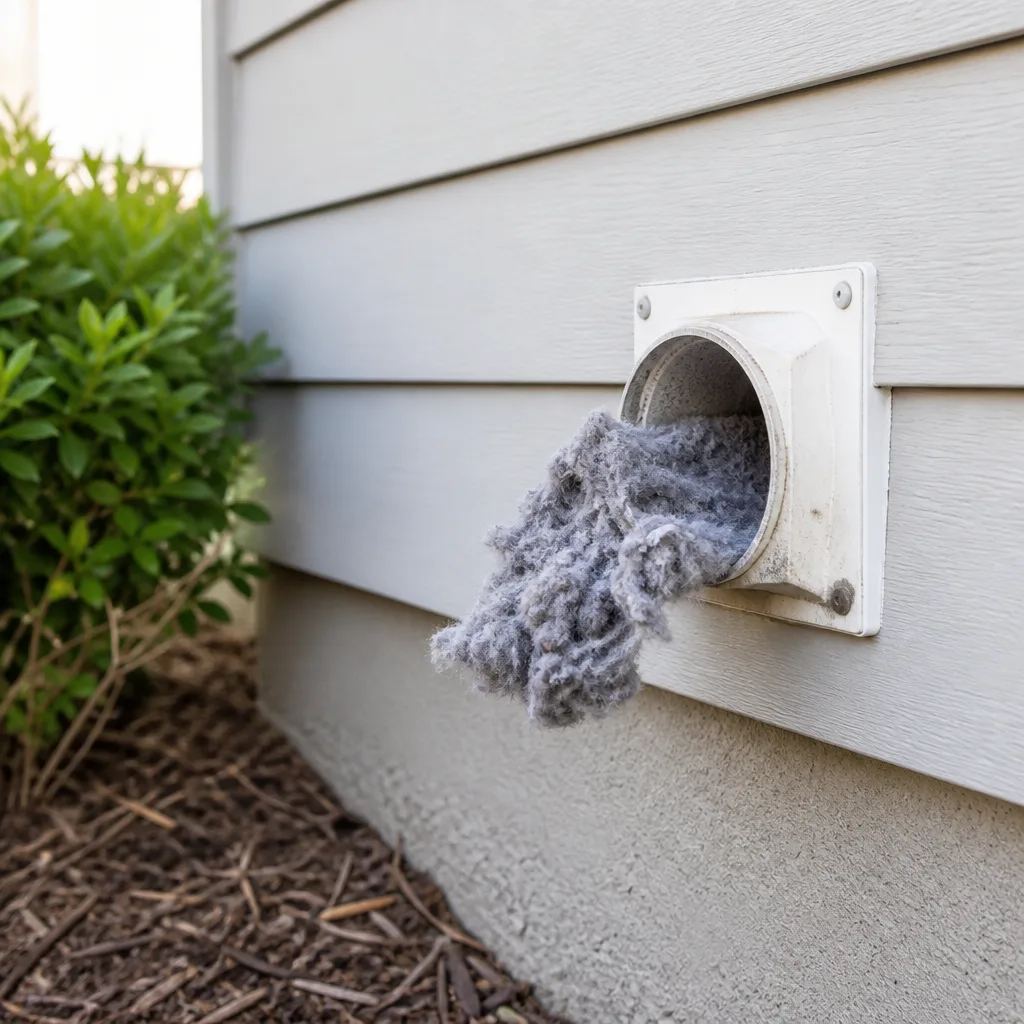
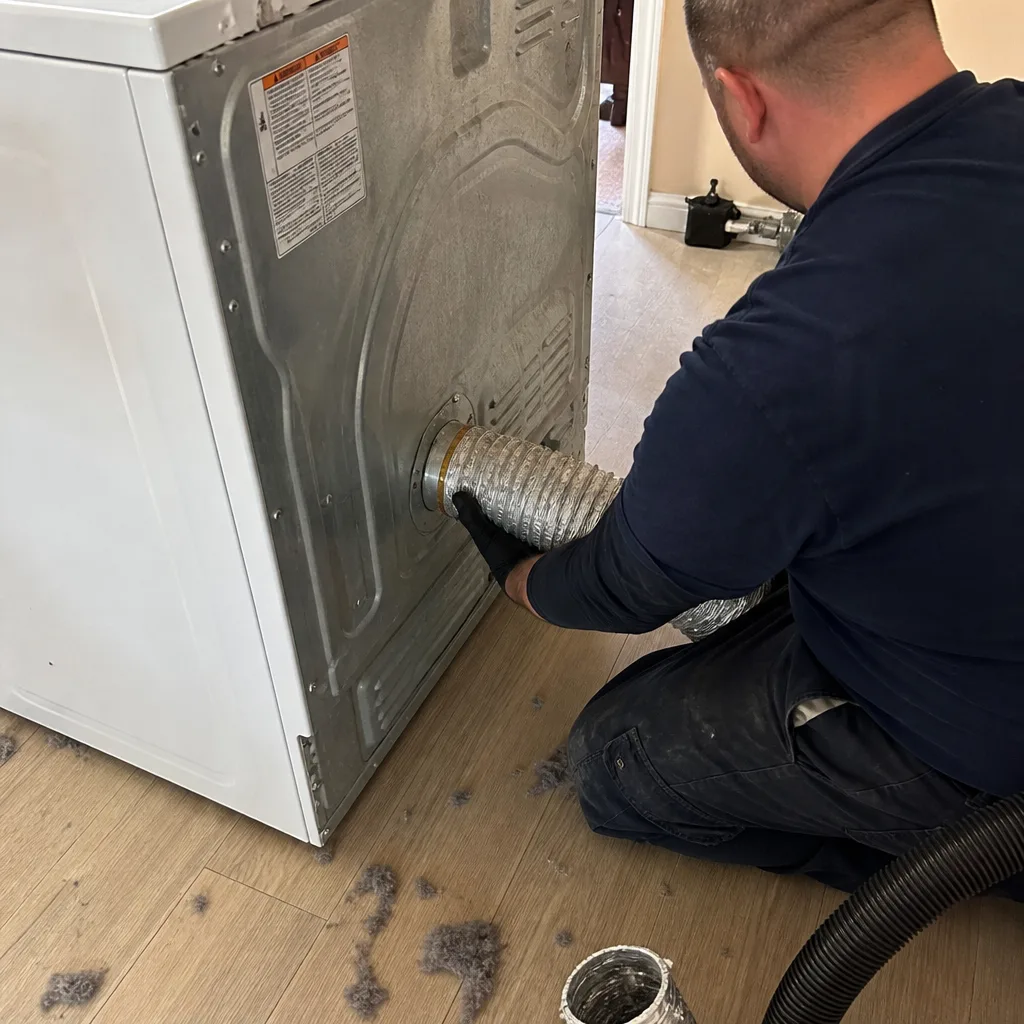
For comparison, our Dryer Vent Cleaning in Schaumburg is priced separately, typically $150-$250, and can be bundled with duct cleaning for reduced total cost. HVAC Cleaning in Schaumburg covers coil and blower components beyond ductwork itself.
Common Mistakes to Avoid
- Accepting a phone estimate without inspection. System configuration, accessibility, and debris severity cannot be assessed by square footage alone. Any contractor who quotes definitively without seeing your system is either guessing or planning to upsell.
- Equating low price with value. A $79 coupon job that cleans 2 of 12 branch lines, leaves the trunk untouched, and produces no documentation is not cheaper than professional work - it’s a different service entirely, with no verifiable outcome.
- Ignoring the return side. Return ducts are larger and harder to clean, so coupon operators often skip them. Yet returns pull air from your living space - if they’re loaded with debris, that debris circulates continuously.
- Failing to verify equipment specifications. “Commercial vacuum” means nothing. Ask for CFM rating, brand name, and whether the unit is HEPA-filtered. A contractor with professional equipment will answer immediately.
- Neglecting post-cleaning documentation. Without photos or video, you have no evidence that work was performed. Demand documentation before hiring, and refuse payment if it’s not delivered.
- Scheduling cleaning without addressing underlying problems. Rodent entry, failed duct seals, or inadequate filtration will recontaminate clean ducts within months. A thorough inspection should identify these issues and offer remediation.
- Assuming all contractors follow NADCA standards. The ACR standard is voluntary. Compliance is not audited by NADCA for every job. Verify specific practices, not logo display.
When to Call a Professional
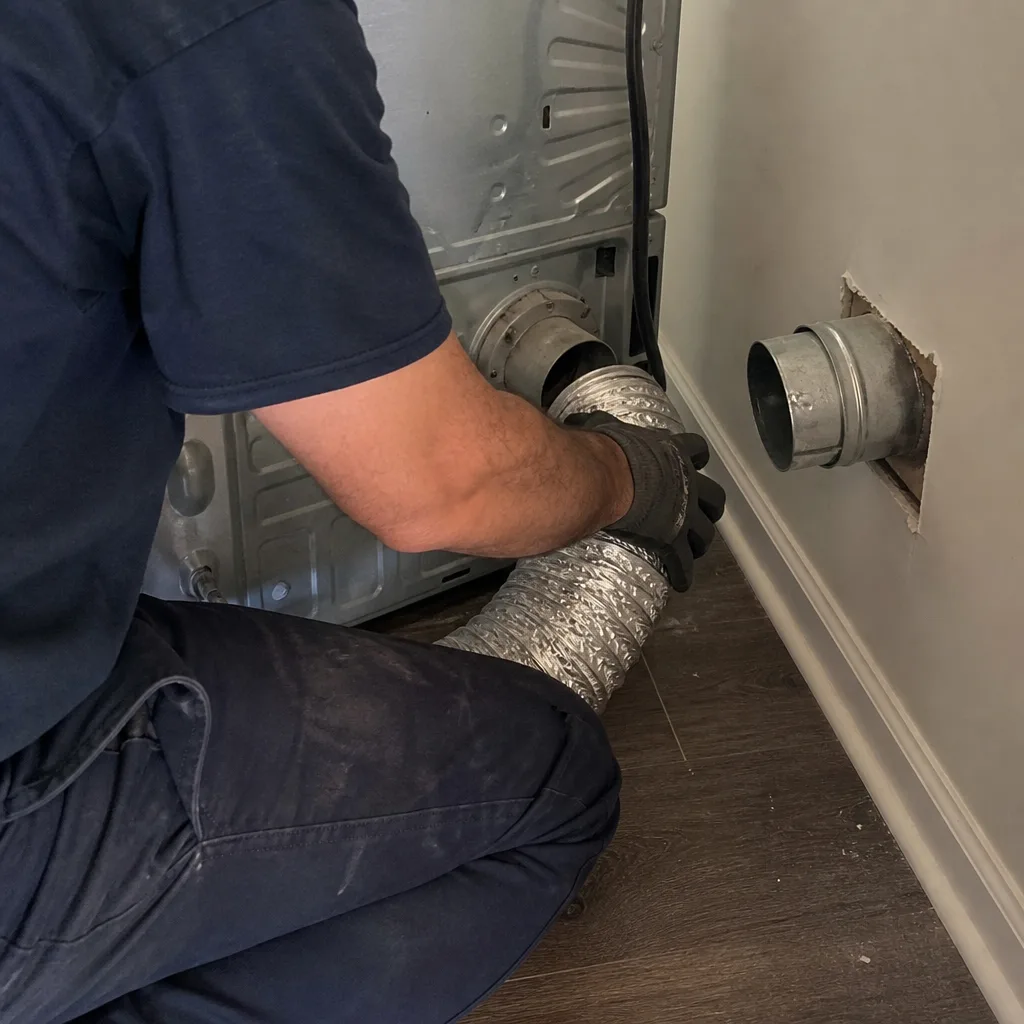
Schedule professional inspection if you observe visible dust emission from supply registers when the system starts, persistent musty odors that correlate with HVAC operation, uneven heating or cooling that suggests blockage, or if your home was built before 1990 and has never had documented duct cleaning. In Schaumburg, where heating systems run continuously from November through March, pre-season inspection in September or October allows time for scheduling without emergency premiums.
CleanRun Air Duct Cleaning Schaumburg offers free estimates in Schaumburg - call (224) 385-0904. Every estimate includes system inspection, written price, and explanation of what documentation you’ll receive. No obligation, no upsell pressure, no “call for a quote” evasion. The price we write is the price you pay.
Frequently Asked Questions
Professional air duct cleaning in Schaumburg costs $350-$800 for most homes, with large or complex systems reaching $1,400. The price depends on register count, system accessibility, and debris severity - not square footage. Call (224) 385-0904 for a free estimate with written pricing before any work starts.
Low quotes typically reflect incomplete service: limited register cleaning, inadequate vacuum power, or no documentation. A $79 coupon job uses equipment that cannot achieve the suction or agitation required by NADCA standards. The real cost difference is between partial cleaning with no verification and complete cleaning with photographic proof.
Demand timestamped, location-identified before-and-after photos of every duct run. Professional equipment includes borescope cameras that document the full duct circumference. Without these photos, you have no evidence of work performed. We deliver all photos within 24 hours as standard practice.
For Schaumburg homes with standard 1-inch filters, every 5-7 years is typical for homes without pets or smoking. Homes with multiple pets, recent renovation, or occupants with respiratory conditions may need service every 3-4 years. The interval should be determined by inspection, not calendar alone.
Moderately, if blower fan and evaporator coil are also cleaned. The Department of Energy estimates that clean HVAC components improve system efficiency 10-15% in heavily loaded systems. Duct cleaning alone primarily improves air quality; efficiency gains require complete system maintenance.
Yes, with proper technique. Homes built before 1990 may have asbestos-containing duct tape or insulation - our technicians are trained to identify these materials and stop work if found, referring to certified abatement specialists. We do not disturb suspect materials.
The Bottom Line
Air duct cleaning in Schaumburg is a documented mechanical process, not a mystery service. The equipment specifications are verifiable, the standards are published, and the results can be photographed. What separates professional work from coupon noise is suction power that moves debris, agitation that contacts every surface, and documentation that proves what happened inside your walls. Demand all three before hiring any contractor. The CleanRun Air Duct Cleaning Schaumburg home page lists our full service range, or call (224) 385-0904 for a free estimate with written pricing.
Written by Tomas Reyes, Owner at CleanRun Air Duct Cleaning Schaumburg, serving Schaumburg since 2013.